
Tay Moss
 In the mid-20th century, educational psychologist Benjamin Bloom and his
colleagues sought to develop a systematic approach to how educators could
categorize and promote learning objectives. Their framework, now known as Bloom’s
Taxonomy, offers a layered structure for learning that moves from basic
knowledge acquisition to higher-order thinking skills. Bloom’s original
taxonomy included six cognitive categories arranged hierarchically: Knowledge,
Comprehension, Application, Analysis, Synthesis, and Evaluation. In 2001,
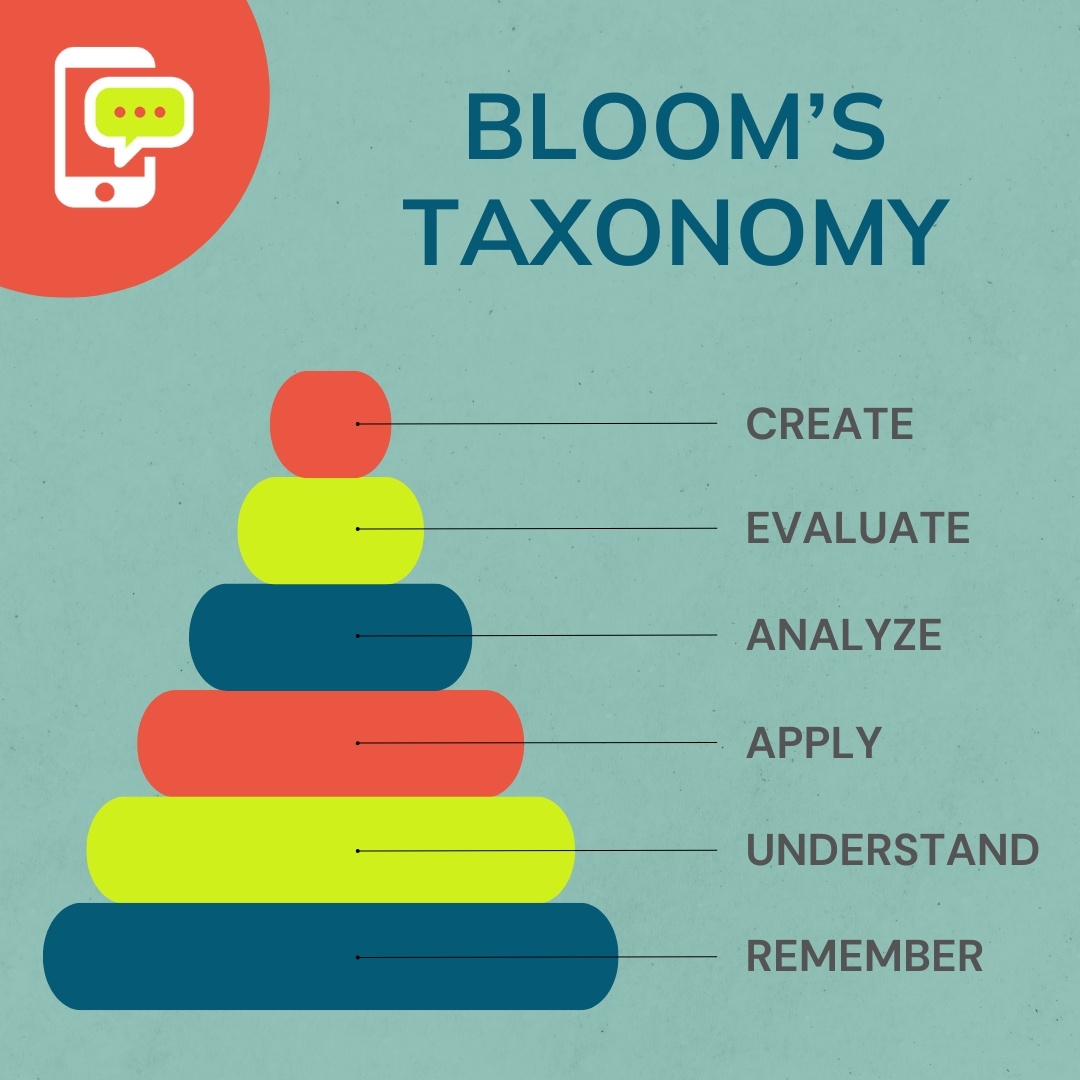
it was revised to more active verbs: Remember, Understand, Apply, Analyze, Evaluate,
and Create. Each element builds on the previous one, providing a useful
framework for educators designing both synchronous and asynchronous courses.
For those in theological
education, Bloom’s structure can serve as a valuable tool to deepen not
only cognitive engagement but also spiritual formation.
[RE1]
Applying the insights gained from Bloom’s Taxonomy can
make your programs more effective at wholistically engaging people whether in
the church or on CHURCHx.
In the mid-20th century, educational psychologist Benjamin Bloom and his
colleagues sought to develop a systematic approach to how educators could
categorize and promote learning objectives. Their framework, now known as Bloom’s
Taxonomy, offers a layered structure for learning that moves from basic
knowledge acquisition to higher-order thinking skills. Bloom’s original
taxonomy included six cognitive categories arranged hierarchically: Knowledge,
Comprehension, Application, Analysis, Synthesis, and Evaluation. In 2001,
it was revised to more active verbs: Remember, Understand, Apply, Analyze, Evaluate,
and Create. Each element builds on the previous one, providing a useful
framework for educators designing both synchronous and asynchronous courses.
For those in theological
education, Bloom’s structure can serve as a valuable tool to deepen not
only cognitive engagement but also spiritual formation.
[RE1]
Applying the insights gained from Bloom’s Taxonomy can
make your programs more effective at wholistically engaging people whether in
the church or on CHURCHx.
The Six Levels of Bloom’s Taxonomy in Theological Education
1. Remember:
This foundational level asks students to recall information accurately. For theological education, this could involve memorizing scripture, church creeds, or theological definitions.
- Example for Synchronous Learning: In a Zoom class, students participate in a quiz game like Kahoot! to test their recall of biblical texts.
- Example for Asynchronous Learning: An online course might feature flashcards or quizzes that allow students to practice key terms and concepts, such as defining the term “eschatology.”
2. Understand:
At this level, students move beyond memorization to comprehend the meaning of what they have learned. They should be able to summarize and interpret information.
- Example for Synchronous Learning: In a live discussion, a professor asks students to summarize the parable of the Prodigal Son and explain what it teaches about grace.
- Example for Asynchronous Learning: A Moodle forum asks students to post responses to questions about Dietrich Bonhoeffer’s “Cost of Discipleship,” encouraging them to explain concepts in their own words.
3. Apply:
Application requires learners to use knowledge in new situations. For theology students, this could mean applying scripture to real-world pastoral situations or ethical dilemmas.
- Example for Synchronous Learning: In a breakout group during a live class, students role-play how they would counsel someone using principles from Pauline theology.
- Example for Asynchronous Learning: A course module challenges students to write a short reflection on how they might apply the concept of agape love in a community outreach setting.
4. Analyze:
This stage requires students to break down complex information into components to understand relationships between them. Analysis encourages critical thinking and deeper engagement.
- Example for Synchronous Learning: In a real-time classroom debate, students analyze different theological perspectives on predestination, identifying key similarities and differences.
- Example for Asynchronous Learning: Students submit essays comparing the Synoptic Gospels, noting differences in the portrayal of Jesus and how each gospel serves its particular audience.
5. Evaluate:
Evaluation involves making judgments about the value of ideas, practices, or information. In theological education, this might mean assessing the strengths and weaknesses of theological arguments.
- Example for Synchronous Learning: In a classroom discussion, students evaluate whether Augustine’s doctrine of original sin is relevant to modern pastoral practice.
- Example for Asynchronous Learning: Using peer review tools, students critique one another’s sermon drafts, offering constructive feedback.
6. Create:
The highest level of Bloom’s taxonomy encourages students to synthesize ideas into new forms or frameworks. This is where theological students can innovate by contributing new ideas to ongoing theological conversations.
- Example for Synchronous Learning: Students collaborate on developing a liturgy for a new worship service, drawing from historical and contemporary sources.
- Example for Asynchronous Learning: A final course project invites students to design a teaching module or Bible study curriculum that reflects both theological rigor and cultural relevance.
Critiques of Bloom’s Taxonomy and Alternative Models
While Bloom’s Taxonomy is widely used, it has not escaped critique. One of the primary criticisms is that the taxonomy assumes a linear and hierarchical model of learning—where students must master lower levels before moving to higher ones. This can oversimplify the complexity of learning, especially in disciplines like theology where knowledge and application are often intertwined. For example, spiritual formation involves both reflection and practical action at every stage, not neatly fitting into a step-by-step cognitive hierarchy.
Alternative frameworks, such as Anderson and Krathwohl’s revision (which emphasizes the interrelatedness of knowledge types and cognitive processes) and Fink’s Taxonomy of Significant Learning, stress the importance of emotional and relational learning. Fink’s model, in particular, focuses on integrating knowledge with self-reflection, which may be more aligned with theological education’s goals of personal transformation and community engagement.
Additionally, some educators prefer constructivist approaches, emphasizing learning as an active, student-centered process that does not follow a fixed sequence. This is especially relevant in asynchronous courses, where students engage at their own pace and in their own sequence, encountering knowledge in non-linear waysWhere to Learn More
For educators and theologians looking to explore Bloom’s Taxonomy further, the following resources are helpful starting points:
- For practical ideas about applying Bloom’s Taxonomy in online courses, visit resources like the Vanderbilt Center for Teaching.
- Anderson, L. W., & Krathwohl, D. R. (Eds.) (2001). A Taxonomy for Learning, Teaching, and Assessing: A Revision of Bloom's Taxonomy of Educational Objectives. New York: Longman.
- Biggs, J., & Tang, C. (2011). Teaching for Quality Learning at University. McGraw-Hill Education.
- Fink, L. D. (2013). Creating Significant Learning Experiences: An Integrated Approach to Designing College Courses. San Francisco: Jossey-Bass.
By understanding and thoughtfully applying Bloom’s Taxonomy, theological educators can design courses that engage students deeply—both cognitively and spiritually—while remaining open to alternative models that enrich their pedagogy.
CHURCHx, as a platform, is much more versatile than most Learning Management Systems, and can therefore support multi-modal methodologies that hit multiple stages at once. This is consistent with our “constructivist” approach to learning, which emphasizes a learner-first approach with multiple ways to engage the same content. Many off-the-shelf learning systems seem to stop at the “remember” stage of learning—simply delivering content. CHURCHx is able to create rich opportunities for students to apply and create new knowledge that has emerged from their learning experience.
 If you want to learn more about how to integrate Bloom’s Taxonomy into
your work, whether you teach in an institution or are a pastor of a church or do
adult formation in another way, we suggest the course “Learning Design for Discipleship” created by Dr. Natalie Wigg-Stevenson.
If you want to learn more about how to integrate Bloom’s Taxonomy into
your work, whether you teach in an institution or are a pastor of a church or do
adult formation in another way, we suggest the course “Learning Design for Discipleship” created by Dr. Natalie Wigg-Stevenson.