
Tay Moss
From Passive to Profound: How Fink’s Model Enhances Religious Education
As religious educators, we aim to create learning experiences that have a lasting impact on our communities, fostering both intellectual and spiritual growth. A few weeks ago I wrote about Bloom's Taxonomy in this blog. While Bloom's Taxonomy has long been a valuable tool for understanding cognitive learning, L. Dee Fink's paradigm of "Significant Learning" offers a fresh and holistic approach that can revolutionize how we design and facilitate learning in religious settings. This article explores Fink's framework, contrasting it with Bloom's Taxonomy, and provides concrete examples of its application in various religious education contexts. In doing so, we will see how Fink's model shifts the focus from a content-centered approach to a learning-centered approach, asking not just "what" will students learn, but "how" and "why".
Bloom's Taxonomy: A Foundation for Understanding Learning
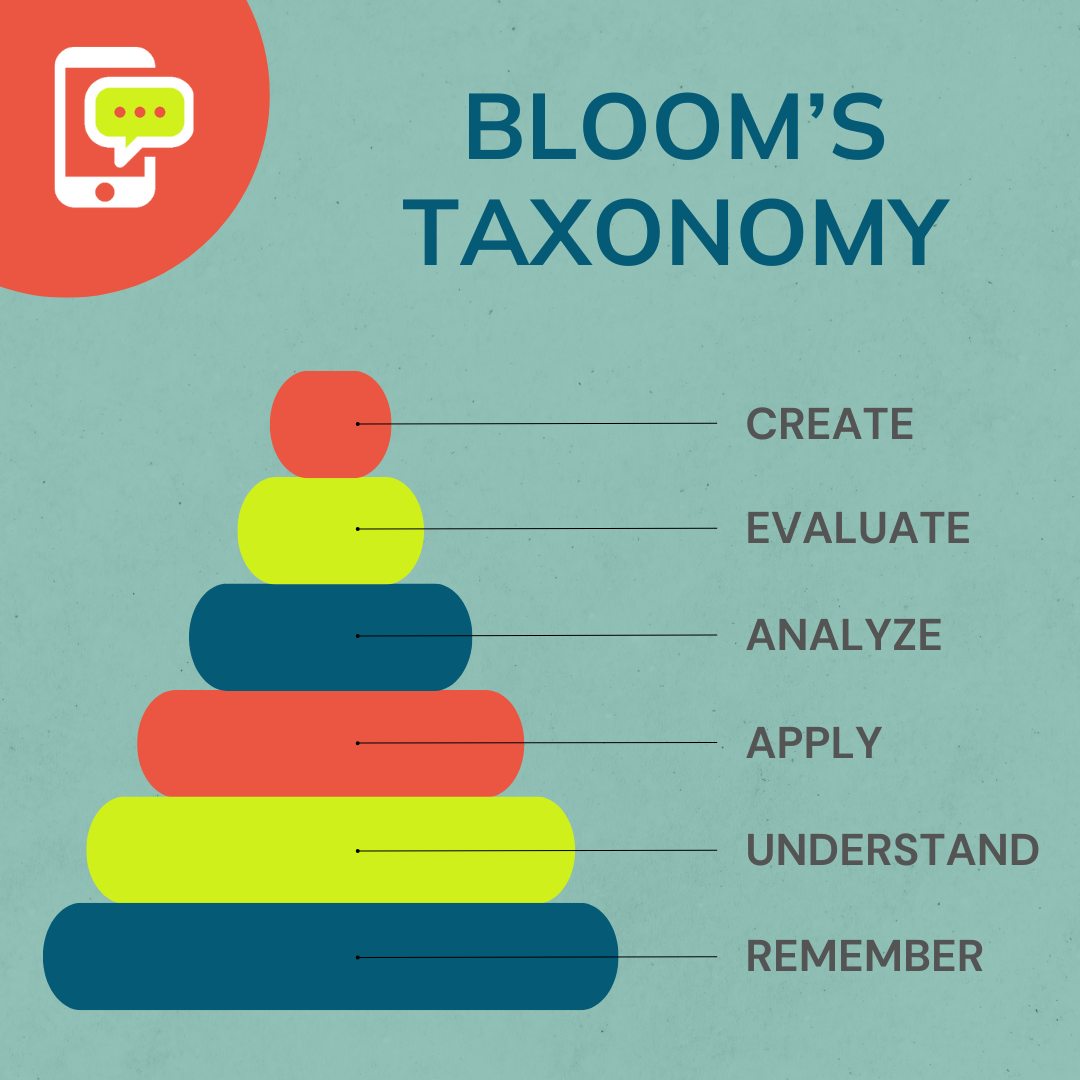 Before delving into Fink's work, let's briefly revisit Bloom's Taxonomy. Developed in 1956 by a group of educators led by Benjamin Bloom, this hierarchical model classifies learning objectives into six cognitive levels: remembering, understanding, applying, analyzing, evaluating, and creating . This framework has been instrumental in helping educators structure learning experiences and assessments that progressively challenge students to engage with information in increasingly complex ways.
For instance, in a Bible study setting, Bloom's Taxonomy can guide us to design activities that move beyond simple recall (remembering) to encourage deeper understanding (e.g., interpreting parables), application (e.g., relating biblical principles to daily life), analysis (e.g., comparing different theological interpretations), evaluation (e.g., assessing the validity of different arguments), and ultimately, creation (e.g., developing a personal theology or action plan based on biblical teachings) .
 Fink's Significant Learning: Expanding the Horizons of Learning
Building upon Bloom's foundation, L. Dee Fink introduced his taxonomy of "Significant Learning" in 2003. An education consultant, Fink was struck by the passion teachers feel that go well beyond the immediate goals of most classes and into life-changing learning. A typical question he would ask is "In 10 years, what do you want to be different about students because they took your class?" Teachers would talk about inspiring a love of learning in the topic and other more "significant" changes. L. Dee Fink defined "significant learning" as a transformative educational experience that goes beyond simply acquiring information. In his book Creating Significant Learning Experiences: An Integrated Approach to Designing College Courses (2003), Fink outlined a Taxonomy of Significant Learning, which emphasizes learning that leads to lasting change in the learner’s life—intellectually, personally, and socially. Fink's model recognizes that truly transformative learning is more than just remembering facts and figures; it's about making connections and changing perspectives. This model goes beyond the cognitive domain to encompass the affective and metacognitive dimensions of learning as well .
He identifies six interactive categories of significant learning:
| Category of Learning | Meaning |
|---|---|
| Foundational Knowledge | Understanding and remembering information and ideas |
| Application | Learning how to do something new: skills, critical thinking, creative thinking, practical thinking, and managing projects |
| Integration | Connecting information, ideas, perspectives, people, or realms of life |
| Human Dimension | Learning about oneself and others |
| Caring | Developing new feelings, interests, and values |
| Learning How to Learn | Becoming a better student, inquiring about a subject, becoming a self-directed learner |
Unlike Bloom's hierarchical structure, Fink's categories are interconnected and non-linear. This means that learning in one category can facilitate and enhance learning in others . For example, as students learn more about how a topic applies to their lives (Human Dimension), they may also develop a deeper appreciation for the subject itself (Caring) . It is important to note that Fink believes that for significant learning to occur, all six dimensions need to be addressed in the design of a course. However, many who apply Fink's model in practice focus on three or four areas.
Applying Fink's Significant Learning in Religious Settings
Fink's framework provides a powerful lens for designing engaging and impactful learning experiences in religious contexts. Let's explore some concrete examples:
1. Seminary Classes:
Imagine a seminary course on the Book of Romans. To foster Foundational Knowledge, students could engage in a "jigsaw" activity where they each become experts on a specific chapter and then teach their peers. To encourage Application, students could write a modern-day letter to a specific community, applying Paul's message to their context. For Integration, students could explore how Romans has been interpreted throughout history and its influence on art, literature, and social movements. The Human Dimension could be addressed through journaling and small group discussions where students reflect on how Paul's teachings challenge their own beliefs and values. Caring could be fostered by inviting guest speakers who embody the principles of Romans in their lives, inspiring students to connect with the material on an emotional level.
2. Church Bible Studies:
In a Bible study on the Parable of the Good Samaritan, Foundational Knowledge could be established through a close reading of the text, exploring its historical and cultural context. Application could involve a group discussion where participants share personal experiences of encountering "neighbors" in need and how they responded. To encourage Integration, the group could discuss how the parable connects to contemporary issues like immigration, poverty, and racial justice. The Human Dimension could be explored through a guided meditation where participants reflect on their own biases and prejudices. Caring could be fostered by partnering with a local charity to put the message of the parable into action.
3. Youth Ministry Programs:
A youth group studying the life of Jesus could build Foundational Knowledge through interactive games and quizzes. Application could involve a role-playing activity where youth act out scenes from Jesus' life, exploring how they would respond in similar situations. Integration could be encouraged by having youth create artwork or music that expresses their understanding of Jesus' teachings. The Human Dimension could be addressed through small group discussions where youth share their personal struggles and how they find strength in their faith. Caring could be fostered by organizing a service project where youth put their faith into action by helping those in need.
Learning How to Learn in Religious Education
 Across all these settings, Learning How to Learn is crucial. This involves equipping individuals with the tools and strategies for ongoing spiritual growth and engagement with their faith. This could include teaching them how to study scripture independently, engage in different forms of prayer and meditation, and cultivate a habit of self-reflection. It also involves encouraging them to ask questions, seek out diverse perspectives, and be open to new understandings of their faith. The goal is not only to equip them to be lifelong learners, but to inspire passion and a sense of their own capabilies to explore independently.
Challenges and Opportunities for Religious Educators
Religious educators face unique challenges in designing learning experiences. They must balance the need for relevance, connecting ancient texts and traditions to the lives of contemporary learners, with faithfulness to the core tenets of their faith . They must also navigate the complexities of fostering emotional and spiritual intelligence, helping individuals develop self-awareness, empathy, and a capacity for moral reasoning . In today's world, where distractions abound and attention spans are shrinking, motivating and engaging students in religious settings can be particularly challenging .
However, these challenges also present opportunities. By embracing innovative teaching methods, incorporating technology and multimedia, and fostering inclusive learning environments, religious educators can create transformative experiences that inspire a lifelong love of learning and a deeper connection to faith.
Bloom's and Fink's Taxonomies: A Comparison
To further clarify the distinct contributions of each framework, the following table summarizes the key differences between Bloom's Taxonomy and Fink's Significant Learning:
| Feature | Bloom's Taxonomy | Fink's Significant Learning |
|---|---|---|
| Structure | Hierarchical | Interactive |
| Focus | Cognitive | Holistic (cognitive, affective, and metacognitive) |
| Application | Primarily for assessing cognitive skills | For designing significant learning experiences that foster lasting change |
Conclusion: Embracing Significant Learning for Transformative Religious Education
Fink's paradigm of Significant Learning offers a valuable framework for religious educators seeking to create transformative learning experiences. By intentionally incorporating all six categories of learning, we can design programs that not only impart knowledge but also foster personal growth, inspire a love of learning, and equip individuals to live out their faith in meaningful ways. Fink's emphasis on personal growth, affective learning, and metacognition directly addresses the challenges of fostering spiritual development, promoting meaningful engagement with religious texts, and equipping individuals for ministry in a diverse and changing world. By moving beyond a purely cognitive approach, we can create learning environments that nurture the whole person, cultivate a deeper connection to faith, and empower individuals to make a positive impact on the world.