
Tay Moss
CHURCHx was always always intended to be used to improve the spiritual lives of students, and many of the programmes partners have developed are intended to do this, but sometimes it's difficult to assess the impact these courses and programmes are having. That's why I recently add the "Spiritual Index of Well-Being" as one of the survey types available by default in the "Feedback" activity.
If you are a teacher or facilitator, you can add this tool as an activity in your course or network. To use the SIWB, simply add the "Feedback" activity to a course, choose "save and display." As a manager or teacher you'll then see options to configure the activity. Pick "Templates" and then choose the "Spiritual Index of Well-Being" template. Select "Use this template" and the the activity will be nearly ready to go. In settings you can configure whether students can take the survey once or multiple times. Note that you could create two instances of the survey--one at the beginning of the course and one at the end--if you want to create a before and after comparison. You can also lock the availability of the "after" version of the survey to make sure it isn't filled out prematurely.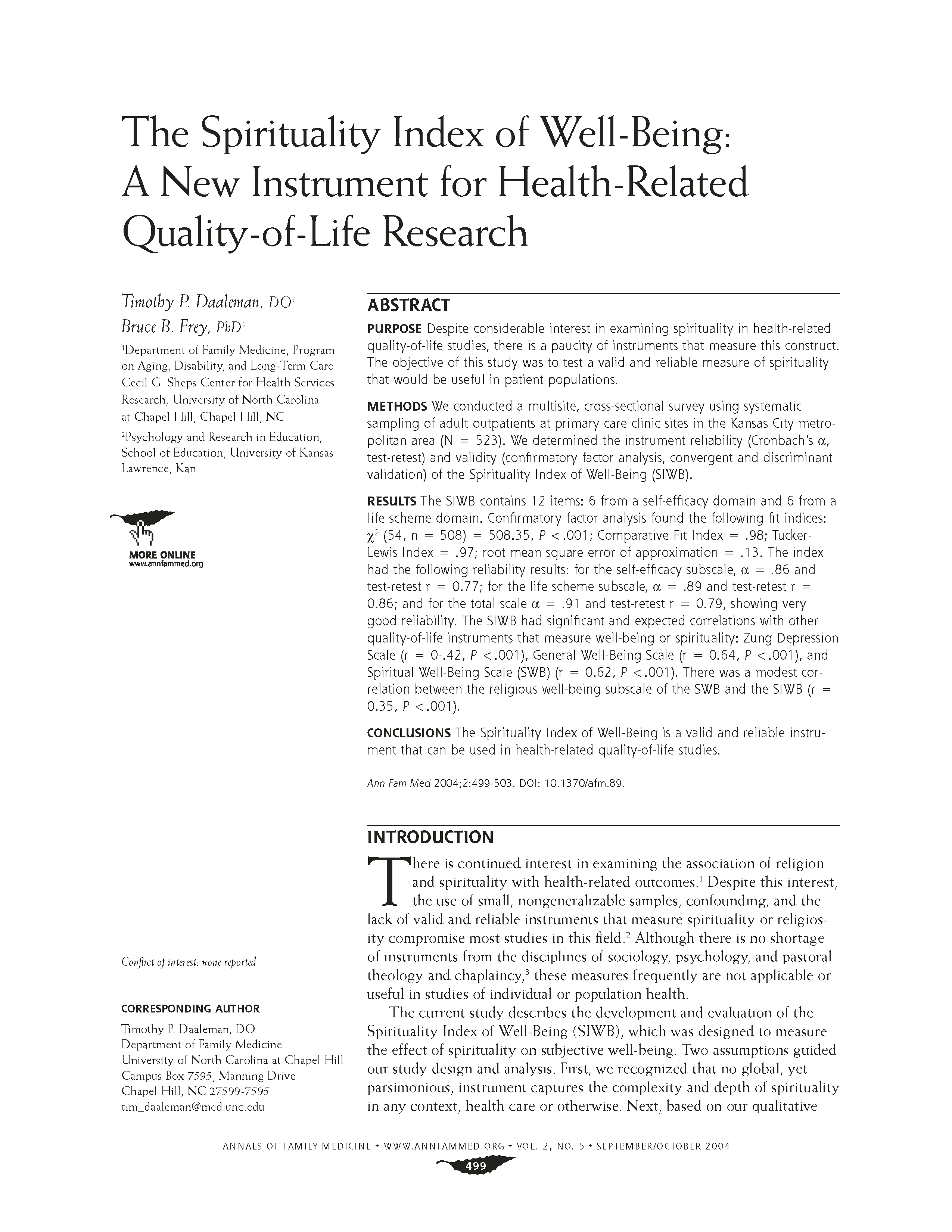 To learn more about the SIWB survey, I suggest reading the original paper that published it, which you can find here. Basically, the instrument measures two factors: Self-efficacy (questions 1-6) and Life Scheme (questions 7-12). "Self-efficacy" assesses confidence in finding meaning and purpose in life. "Life Scheme" evaluates the coherence and integration of personal beliefs and values. Simply total the answer values in each scale to get a score. Using the "Analysis" tab you can see a breakdown of how the students in the course answered each question, but it's probably easiest to simply download the results as an XLS and run calculations on in there. If anyone needs help doing that, let me know and I'll see about creating an XLS template to make it easier.
Eventually I plan to add some other spirituality and even mental health instruments as templates into CHURCHx. I started with this one because it's short (12 questions) and pretty easy to deploy. As always, if you use this instrument please treat the answers as health information and protect the confidentiality of participants. Do not publically release the scores of individuals, though aggregated data without personal identifying information is okay.
Standardized instruments like this may feel a bit cold and clinical, especially in a spirituality and faith context where so much is personal, individiualized, and diverse. Yet there are many cases where it's reasonable to ask "is this working?" and to tools like this can create a relatively easy way to get valuable feedback necessary to improve our efforts.
If you want see more standardized tools like this added to the platform, please let me know! Other ones I'm investigating include:
- Spiritual Well-Being Scale (SWBS)
- Brief Multidimensional Measure of Religiousness/Spirituality (BMMRS)
- Sense of Community Index (SCI)
- Psychological Sense of Community Scale (PSCS)
- Brief Sense of Community Scale (BSCS)
I should also point out that the "survey" tool in CHURCHx already includes common instruments to measure the effectiveness of online learning:
- COLLES (Constructivist On-Line Learning Environment Survey): Evaluates the relevance, reflection, interactivity, tutor support, peer support, and interpretation within the online learning context.
- ATTLS (Attitudes to Thinking and Learning Survey): Assesses students' preferences towards connected knowing (empathy-based learning) versus separate knowing (critical thinking).
- Critical Incidents: Encourages students to reflect on specific moments during the course that were particularly engaging or distancing.
If you have more questions about these instruments or how to use them on CHURCHx, please don't hestitate to reach out to me!