
Tay Moss
Transformative Learning and Faith Formation: Insights from Jack Mezirow
 In the world of adult education, Jack Mezirow’s Transformative Learning Theory stands alongside foundational models like Bloom’s Taxonomy and Fink’s Significant Learning as a powerful framework for understanding how people learn and grow. You can read about Bloom’s Taxonomy or Fink’s Significant Learning in my previous blog articles.
While Bloom emphasizes cognitive mastery and Fink highlights holistic, meaningful learning, Mezirow focuses on something even more radical: how learning transforms individuals at a fundamental level. For religious leaders designing faith formation programs, this theory offers valuable insights into how faith can be deepened, reshaped, and made more relevant in people's lives.
What Is Transformative Learning?
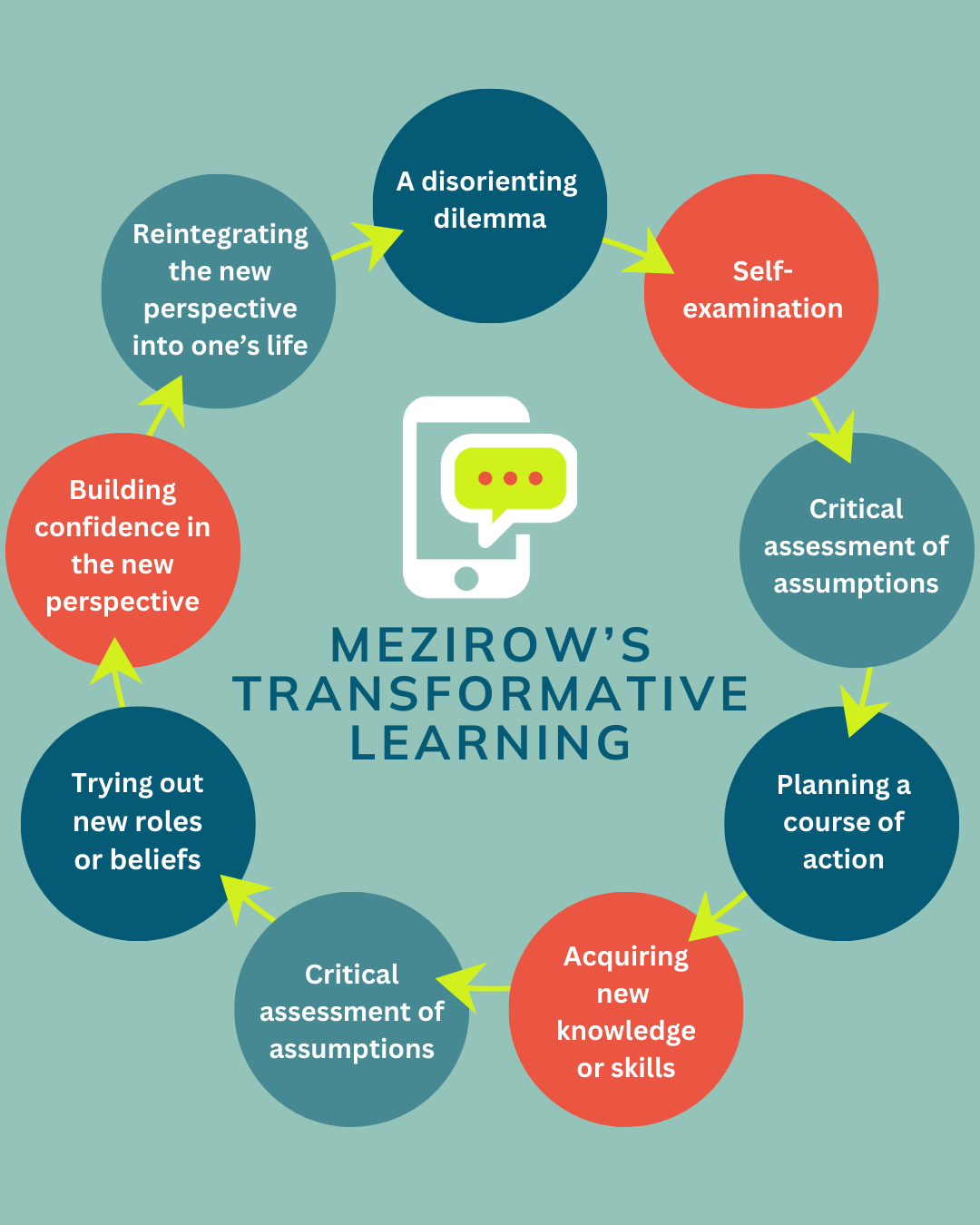 Mezirow developed his theory in the 1970s while studying how adults make sense of life experiences. He discovered that true learning—especially for adults—is not just about acquiring new information. Instead, it often involves a shift in perspective, where learners critically examine their assumptions, beliefs, and worldviews in light of new experiences. This shift, or perspective transformation, happens through a process that includes:
A disorienting dilemma – An experience that challenges current ways of thinking.
Self-examination – Reflea on Sdiscomfort or confusion.
Critical assessment of assumptions – Evaluating existing beliefs.
Exploration of new roles or perspectives – Seeking new ways of understanding.
Planning a course of action – Determining how to integrate new insights.
Acquiring new knowledge or skills – Learning to support the change.
Trying out new roles or beliefs – Experimenting with new perspectives.
Building confidence in the new perspective – Gaining affirmation from experience.
Reintegrating the new perspective into one’s life – Fully adopting a transformed worldview.
In the context of faith formation, this model is deeply relevant. Many of the most profound moments of religious growth occur when people face disorienting dilemmas—life crises, ethical challenges, encounters with different perspectives—that push them to reassess their faith and practices. The role of religious educators is to create environments that support and guide these transformations rather than merely deliver doctrine.
Practical Implications for Church Programs
1. Designing Faith Formation for Transformation
Many traditional church education programs focus on content delivery—teaching biblical literacy, doctrine, and church history. While these are essential, transformative learning suggests that faith formation should also facilitate critical reflection and perspective shifts. Some practical applications include:
Testimony and Storytelling: Create spaces for congregants to share experiences of faith struggles and breakthroughs. Hearing about others' transformative experiences can serve as a catalyst for self-examination.
Guided Reflection: Encourage journaling or small-group discussions where participants critically examine their beliefs in light of new experiences.
Retreats and Pilgrimages: These experiences often serve as disorienting dilemmas that challenge and deepen faith.
Engagement with Other Traditions: Interfaith dialogues or exposure to different Christian traditions can push participants to re-evaluate their assumptions.
2. Preaching and Worship as Transformative Practices
 Transformative learning suggests that sermons and worship should not just reinforce existing beliefs, but also gently (or not-so-gently) challenge assumptions and encourage deeper faith exploration. Consider:
Sermons that Pose Questions: Instead of delivering answers, frame sermons around open-ended, challenging questions. Don't be afraid to leave the congregation to complete the sermon.
Liturgy That Engages Critical Reflection: Use confession, lament, and testimony to invite congregants into self-examination and perspective shifts. Challenge the congregation with opinions contrary to what they believe. Make them wrestle with conflicting values.
Art and Symbolism: Encourage deeper reflection through creative expressions—music, visual art, and drama that provoke new ways of seeing faith. Traditionally Christian worship (particularly in Protestant denominations) has been dominated by the "word." But not every expression of God's Spirit is reduceable to "logos." Consider using art. But don't tell people what it means--invite interpretation. This is especially rich if the community encounters the same art over a period of time, as "living with" art is a deeper experience than simply "encountering" it at one moment in time.
Transformative preaching is evocative and even, potentially, provocative. It moves the location of transformation from the pastor’s study to the hearts of the congregation as they become, in a sense, implicit characters in the sermon. A pastor seeking to transform members of the congregation holds them in mind during the creation process, carefully creating and sustaining tensions in worldview or homeletic expectation.
One useful question to set a preacher on a path towards this type of preaching might be "Why does this change everything?" The Gospel, by it's nature, ought to be disruptive: a once-in-the-universe direct intervention in history of an all powerful God. The ripples of the Jesus-event resonate through history. So how are those vibrations felt in the pew, today, and "how can I amplify them?" Thoughtful preachers and invited by Mezirow to reach beyond merely explaining God's Word to actually proclaiming it.
Implications for Online Faith Education
The rise of digital platforms like CHURCHx for faith education presents both opportunities and challenges for transformative learning. While much online education can sometimes feel passive, well-designed online programs can support deep transformation in several ways:
1. Facilitating Reflection Through Digital Media
Online Journaling and Discussion Boards: Structured prompts that encourage reflection on faith experiences can mirror in-person small-group discussions.
Video Testimonies and Podcasts: Sharing personal stories of transformation can be just as powerful online as in person.
Interactive Multimedia: Use documentaries, interactive Bible studies, or immersive digital storytelling to create disorienting dilemmas.
2. Creating Spaces for Critical Dialogue
Virtual Small Groups: Platforms like CHURCHx can host discussions that encourage critical assessment of assumptions.
Interfaith and Cross-Cultural Conversations: CHURCHx allows for global faith conversations, exposing participants to diverse perspectives.
Q&A Sessions with Faith Leaders: Livestreamed or recorded sessions where leaders discuss challenging faith questions can facilitate transformation.
3. Encouraging Action-Based Learning
Transformative learning is not complete until a person integrates their new perspective into life. Online faith education can support this through:
Service Learning Challenges: Encourage participants to engage in justice or community service projects and reflect on their experiences.
Spiritual Practices Apps: Guide users through new prayer practices or meditative reflections that reinforce transformed perspectives.
Digital Mentorship Programs: Connect learners with mentors who can guide them through faith struggles and shifts.
Final Thoughts and Further Reading
For CHURCHx, Mezirow’s theory challenges us to rethink faith formation as more than just knowledge transmission. Instead, we are called to be facilitators of transformation, helping people navigate faith shifts with wisdom and grace. Whether through networks, courses, or webinars, our role is to create environments where people can critically reflect, explore new perspectives, and ultimately deepen their faith in meaningful ways.
For further reading, consider:
Jack Mezirow, “Transformative Dimensions of Adult Learning” (1991) – The foundational book on transformative learning.
Parker J. Palmer, “To Know as We Are Known: Education as a Spiritual Journey” – A great companion read on faith and transformative learning.
Stephen Brookfield, “Becoming a Critically Reflective Teacher” – Insights into guiding reflection in faith education.
By embracing transformative learning in our faith communities, we can create spaces where spiritual growth is not just about learning more, but about becoming more.