
Tay Moss
Gamification in Christian Education: Engaging Learners Through Play
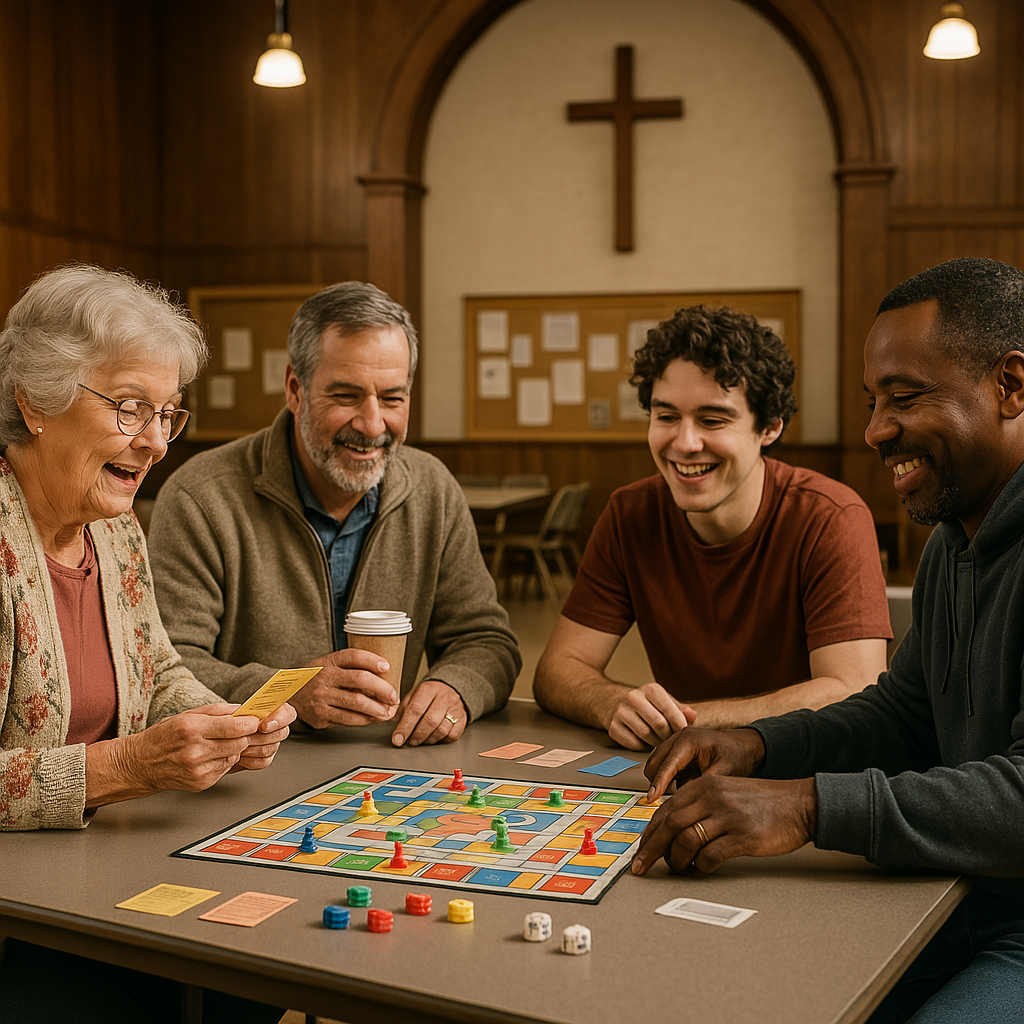 The way we learn is changing, and churches must adapt to keep people engaged in faith formation. One powerful tool that’s gaining traction in education is gamification—the use of game-like elements to enhance learning. Whether in Sunday school, youth groups, Bible studies, or adult education, gamification can make learning about faith more interactive, engaging, and effective.
In this article, we’ll explore what gamification is, why it works, some examples, and how ideas of how churches can use this technique to make Christian education more compelling.
What Is Gamification?
Gamification is the process of applying game-like mechanics—such as points, levels, challenges, and rewards—to traditionally non-game settings like classrooms or church education programs. The goal is to make learning more engaging, fun, and motivating.
Gamification works because it taps into human psychology. It encourages participation, fosters a sense of progress, and makes learning active rather than passive. Because behaviours are rewarded in the game mechanic, games tap into deep human drivers of motivation and activate parts our brain that would otherwise remain dormant if we are simply passively consuming content.
Do we want to make faith “competitive”?
A common reservation about using gamification is that it might introduce a spirit of competition or unwanted comparison. Congregations are diverse, and not everyone will be equally skilled at any game you might choose to do. Here are several strategies to avoid this problem:
-
Team-based games give people the opportunity to work collaboratively in ways that give everyone a chance to contribute.
-
Choose different types of games so that there is diversity in the types of players who will succeed.
- Use games that focus of collaboration where the outcome is that everyone wins (as opposed to “zero sum” games where some must lose for others to win).
- Design or adapt games to accommodate various ages and abilities.
- Allow players to “opt-in” to decide their own level of involvement.
- Randomize roles to prevent reinforcing hierarchies or pigeonholing.
- Maintain a playful, not performative, tone.
- Debrief games with a chance for people to express themselves.
Gamification Works in Church Education
 Gamification works to achieve the goals of formation on both an individual and congregational basis:
-
Engagement – Games make learning fun and immersive. People (especially kids and youth) are more likely to remember lessons when they are actively participating.
-
Motivation – Gamification introduces a sense of challenge and achievement, making people more invested in their learning journey.
-
Community Building – Group games foster a sense of fellowship and teamwork.
-
Faith in Action – By integrating challenges and rewards, gamification encourages participants to live out their faith in practical ways.
Examples of Gamification for Church
Here are some real-world examples of Gamification used in churches.
1. “Mission Possible”
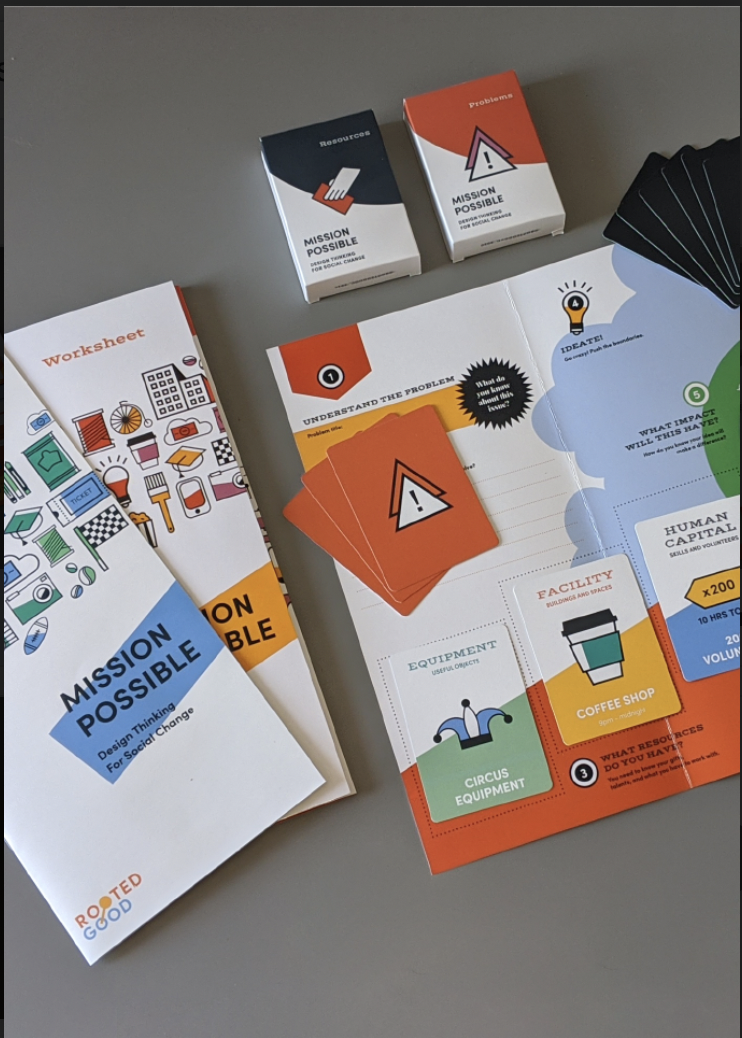 Mission Possible is an interactive workshop-in-a-box designed to foster creativity, resourcefulness, and teamwork among participants. In this game, teams are provided with a set of resources and tasked with developing innovative solutions to complex social challenges. Throughout the process, participants engage in design thinking, idea generation, impact measurement, and presentation skills. The game accommodates groups ranging from 5 to 100 individuals and has been utilized by organizations such as Duke University, Princeton University, and Target.
Tools: Game Set: https://ministrydownloads.com/product/mission-possible ($149 USD).
2. Bible Trivia Competitions
How it works: This can be deployed in-person as a fun game in person or asynchronously. People can play individually or be organized into teams. It is easy to either acquire a set of questions or create your own (perhaps based on the congregation’s current season or focus). One creative option would be to include a challenging question in a weekly parish eNewsletter—inviting interaction in an otherwise one-way “broadcast” medium. Participants can earn points for correct answers, and the top scorers could receive small prizes (e.g., bookmarks, devotionals, coffee cups, or recognition in the church bulletin).
Tools: Example Bible Trivia Games: “Bible Jeopardy,” “So You Think You Know the Bible.”
2. “Episcopopoly”
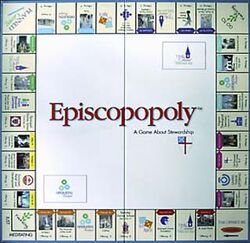 How it works: Episcopopoly is a stewardship-themed board game that playfully mirrors the classic mechanics of Monopoly, but with a unique Episcopal twist. Players compete and collaborate to build, sustain, and grow Episcopal churches, all while learning about church operations and stewardship values in a fun and engaging way.
Tools: It may be difficult to find this board game which was originally published in 2003 by “Late for the Sky” games, but I’ve included it on here as an example of what can be done. Directions for creating your OWN Monopoly-based game can be found here.
 3. “The Truth in Truth and Reconciliation Board Game”
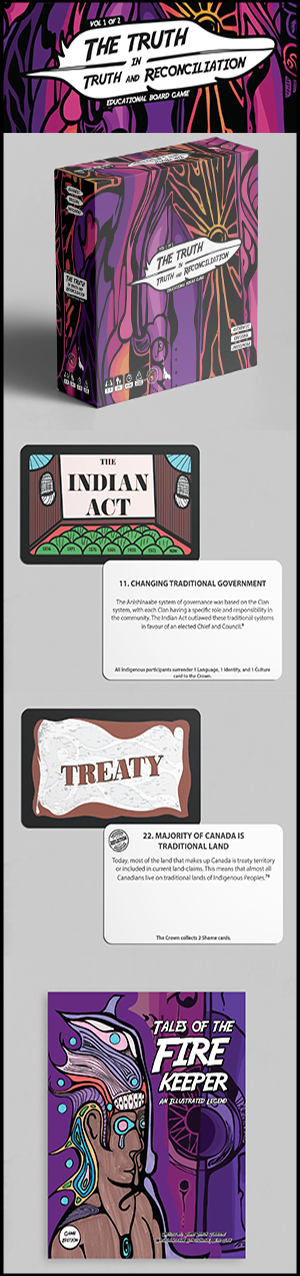
How it works: "The Truth in Truth and Reconciliation Educational Board Game" is an immersive tool designed to educate players about the colonization of Indigenous Peoples in Canada. Developed by James Darin Corbiere (Waabi Makoohns), an Anishinaabe artist and educator from Wiikwemkoong, Ontario, the game offers participants a vicarious experience of the challenges faced by Indigenous communities. Players aim to navigate Turtle Island, collecting four Eagle Feathers symbolizing Land, Language, Culture, and Identity. Throughout the journey, players encounter "Truth" and "Consequence" cards that present historical events and policies enacted by the Church and the Crown, reflecting real-life adversities faced by Indigenous Peoples. Successfully collecting all four Eagle Feathers signifies survival and resilience in the face of colonization.
Tools: An Indigenous educator-created guide supports facilitators in deepening the learning experience, providing context and discussion points. The graphic novel "Tales of The Firekeeper," written and illustrated by Corbiere, complements the game by offering narratives that enrich understanding. The game kit can be purchased online here. ($99.99).
3. Digital Badges for Faith Formation
How it works: Offer digital or physical badges for milestones like memorizing scripture or completing a service project.
Tools: Canva (to design badges), Google Sheets (to track progress), or a church learning platform.
4. Mission Challenge
How it works: Assign real-world challenges that encourage faith in action, such as:
-
Praying for five people this week.
-
Completing a random act of kindness.
-
Inviting a friend to church.
Each completed mission earns a point toward a larger goal, like a group celebration or donation to a charity.
Tools: A leaderboard on a bulletin board or digital tracking using a website or app.
5. Role-Playing Bible Stories
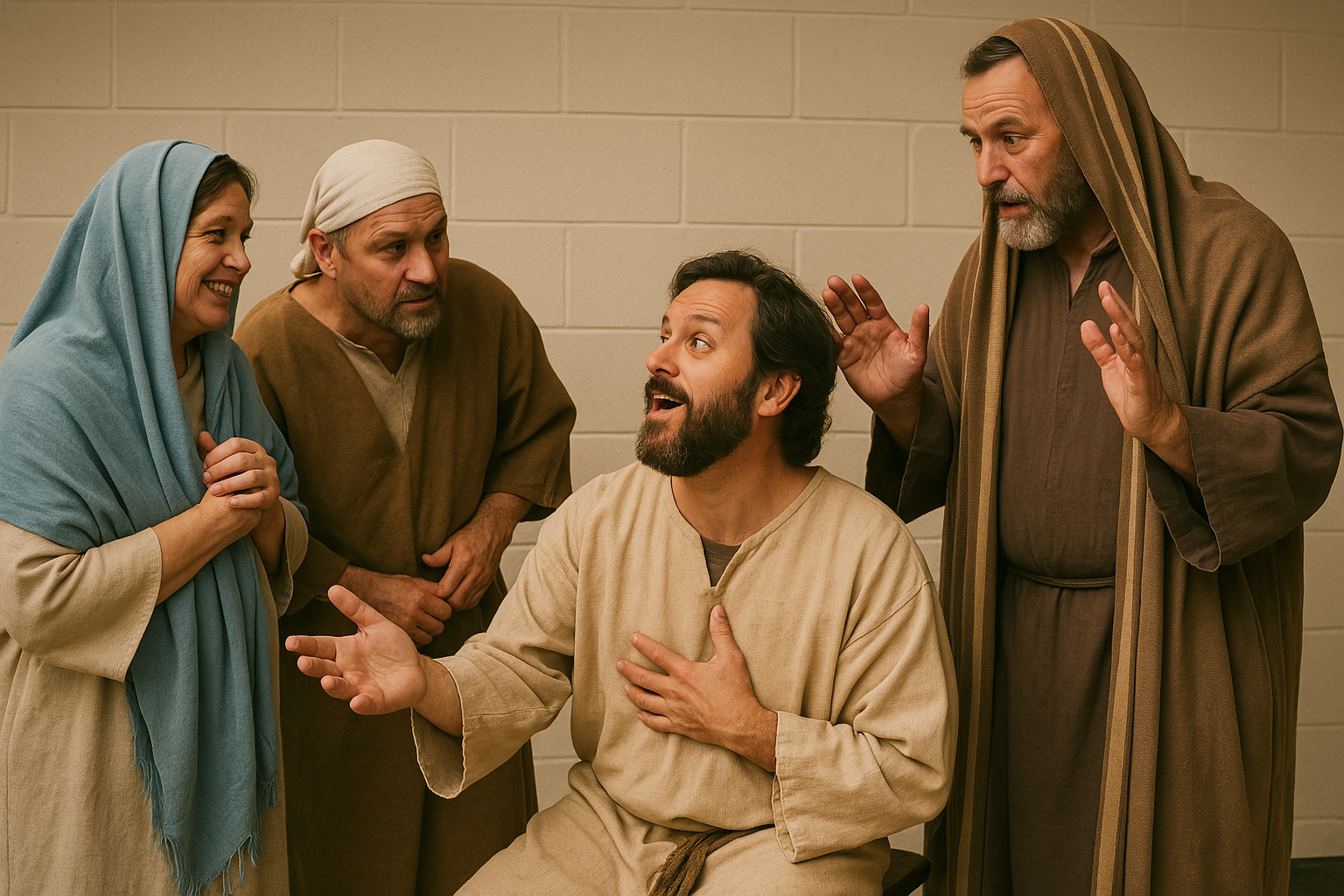 How it works: Instead of simply reading scripture, have participants act out key moments in biblical history. Let them take on different roles and explore how they would respond in biblical situations.
Tools: Simple props, costumes, or storytelling prompts.
6. Sermon Bingo
 How it works: Give attendees a bingo card with key words or themes related to the sermon. As they listen, they mark off words they hear. A completed row or column earns a small reward.
Tools: Printable bingo cards or an app like Bingo Baker.
7. Scripture / Holy Hardware Scavenger Hunt
How it works: Hide Bible verses or clues around the church. Each clue leads participants to the next, culminating in a final scripture lesson or a small prize.
Tools: Printed clues, envelopes, and small incentives.
9. Make Your Own Game
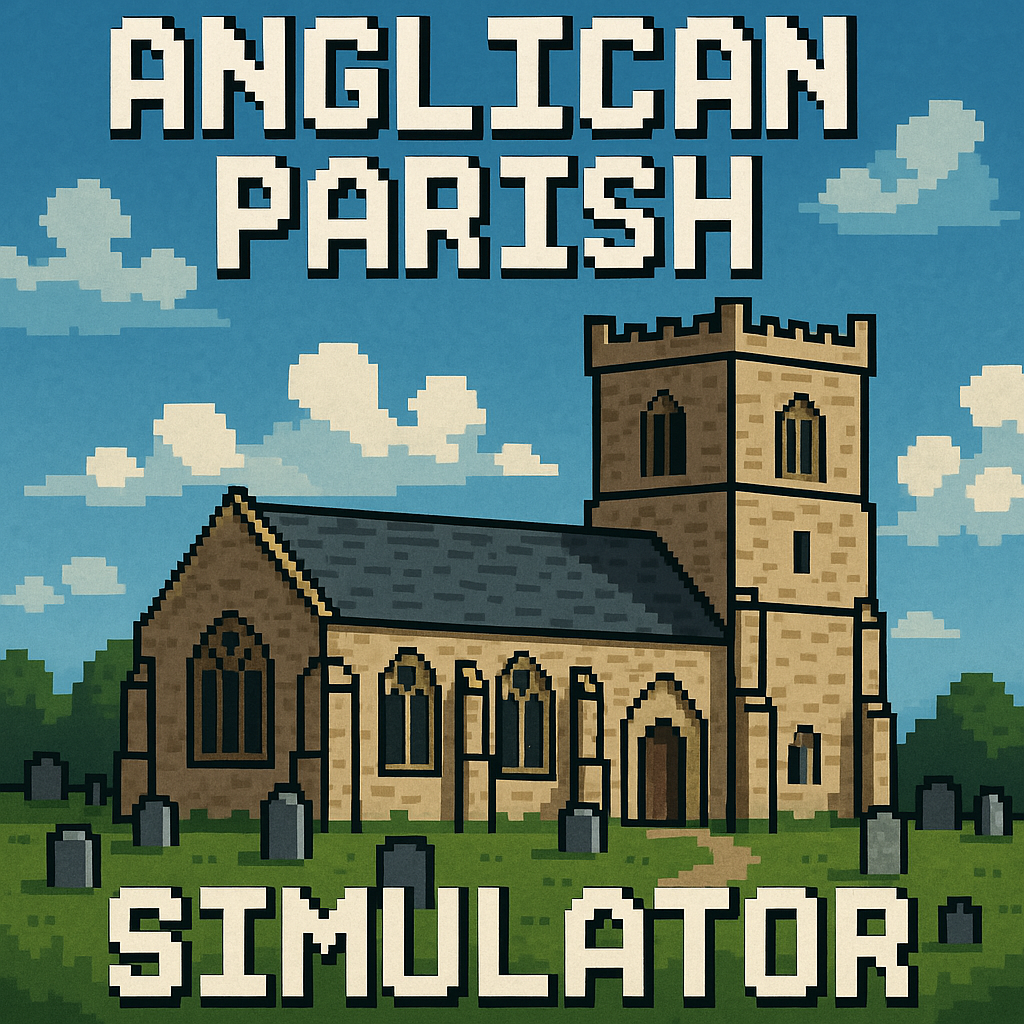 How it works: AI has made it incredibly easy to create and refine your own design for games. Simply explain to a tool like ChatGPT or Gemini or Claude what kind of game you are looking to create, and let it brainstorm with you. This works great to create in-person games, but you can also quickly and easily create online games using tools like Gemini or Claude’s “Canvas” features. For example, here is an “Anglican Church Simulator” that took me less than 15 minutes to create. Much of that time was spent asking the AI to tweak the game mechanics, and with more time this could be further elaborated and developed with no knowledge of computer coding at all.
Tools: Your own brain, craft supplies, and possibly an AI of your choice.
Tips for Successful Gamification in Church
-
Make It Voluntary – Not everyone enjoys competition, so offer alternatives for those who prefer to learn differently.
-
Keep It Aligned with the Message – The goal is spiritual growth, so every game should reinforce faith-based learning.
-
Balance Fun and Depth – Games should be engaging but still encourage meaningful reflection.
-
Celebrate Participation, Not Just Winning – Recognize effort and progress rather than just rewarding those who score the highest.
-
Use Technology (When Appropriate) – Digital tools can enhance gamification, but low-tech solutions work just as well.
Conclusion
Gamification isn’t about turning church into a game—it’s about enhancing engagement and participation in faith formation. When done well, it can make learning interactive, meaningful, and memorable for all ages.