
Tay Moss
Brainstorming 101: Beyond the Blank Stares
Brainstorming doesn’t have to be boring or stiff. In fact, the best ideation sessions are energetic, inclusive, and even a little goofy – all while producing serious results. In this article, we’ll explore how to lead a team in brainstorming and ideation using creative, fun approaches that generate innovative ideas and strong buy-in from everyone involved. We’ll look at key frameworks (like Design Thinking and Liberating Structures), handy tools (from sticky notes to Miro boards), and even dive into real-life examples – including a church launching a new ministry and a seminary planning a Lilly Grant project. Grab your markers (and maybe some coffee), and let’s get those ideas flowing!
Why Brainstorming (Done Right) Matters
Brainstorming brings people together. When a team gathers around a whiteboard or flipchart to share ideas, something powerful happens: everyone feels involved and invested. Group brainstorming opens the door to better communication and creates “common ground where everyone has a stake in the outcome”. In other words, when people feel they’re part of creating a solution, they’re far more likely to support it. This sense of ownership turns a skeptical crowd into enthusiastic partners – a win-win where leadership gains fresh ideas and the team feels valued.
 Inclusion = Innovation. The more diverse the brainstorming group, the richer the ideas. Research shows that diverse teams solve complex problems faster than homogenous ones, because varied perspectives spark more creative solutions. So involve folks from different roles, backgrounds, ages – in a church setting, that might mean the pastor, the youth rep, the tech volunteer, and the longtime elder all at the table. Everyone brings a unique lens. As one innovation article put it, brainstorming is a “collaborative ideation process, a symphony of minds” that dismantles conventional thinking and encourages a free flow of diverse and inclusive ideas. When you include many voices, you get ideas one person alone would never imagine.
No bad ideas (for now). Crucial to successful ideation is creating a judgement-free zone. Google’s research on team performance found that psychological safety – feeling safe to take risks or share wacky ideas without being ridiculed – was the number one factor of high-performing teams. So, set ground rules that defer judgment and welcome wild ideas. In classic IDEO fashion, remind the group: “There are no bad ideas in brainstorming.” Go for quantity over quality at first – you can always trim later. IDEO’s own seven rules for brainstorming include “defer judgment” and “encourage wild ideas,” because there’s often only a thin line between an outrageous notion and a brilliant solution. By suspending criticism, you create a safe space that lets creativity flow. (And yes, that means the suggestion of a church petting zoo could inspire the next great outreach idea – don’t knock it ’til you’ve heard it!)
Have fun with it. Brainstorming should feel more like play than work. Use humor, give permission to be silly, maybe even supply some colorful pens or toys to lighten the mood. When people are laughing with each other (not at ideas), they relax – and relaxed minds think more freely. One financial consulting article even advises teams to “have fun, laugh and be creative — wild and crazy is okay!” as a rule of brainstorming. When the session is enjoyable, participants stay energized and engaged. As a result, you not only generate lots of ideas, but you also strengthen team morale. The bottom line: a fun atmosphere isn’t just goofing off – it’s fuel for innovative thinking.
Proven Frameworks for Innovation
To channel all that creative energy productively, it helps to have a framework. Two of our favorites are Design Thinking and Liberating Structures. They offer some structure (so the brainstorm doesn’t derail into chaos) while still keeping things fun, human-centered, and collaborative.
Design Thinking: Human-Centered Ideation
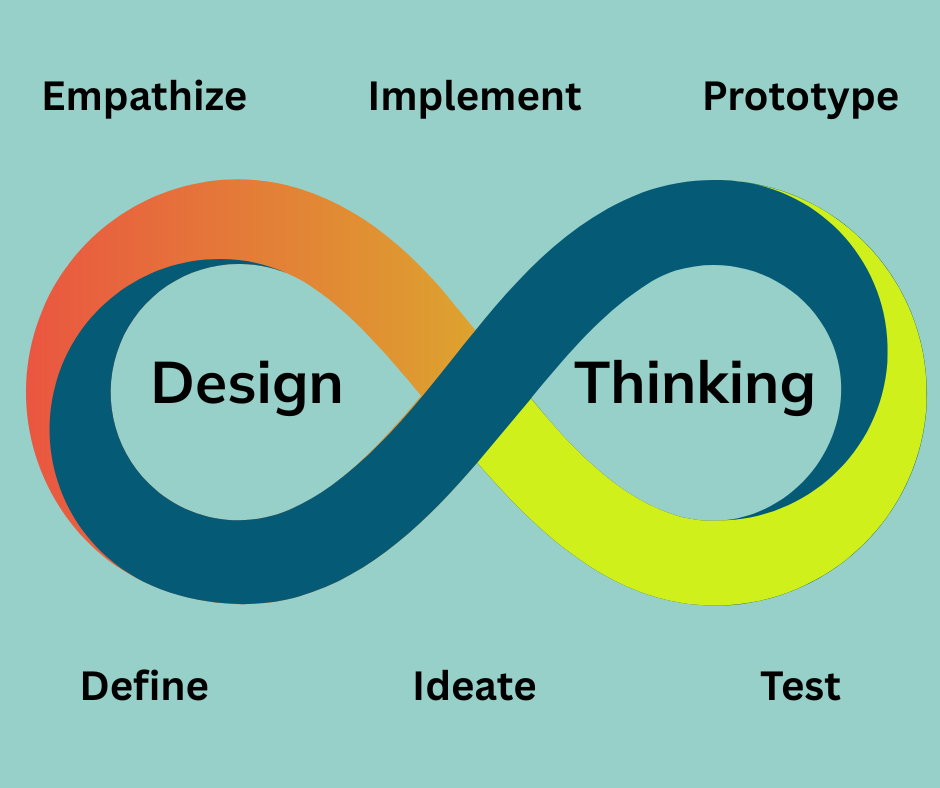 Design Thinking is a popular framework for innovation that centers on understanding people’s needs and iterating toward better solutions. Often summed up in five stages – Empathize, Define, Ideate, Prototype, Test – it’s essentially a cycle that encourages teams to empathize with users, clearly define the problem, generate lots of ideas, and then try things out quickly. For our purposes, the Ideate stage is where the brainstorming magic happens.
In design thinking, the ideation phase is all about thinking outside the box. At this point, you’ve done your homework – you understand your “users” (be they church members, students, whomever) and have defined the challenge – so now you free your mind to find fresh approaches. One guide describes this step as “look for alternative ways to view the problem and identify innovative solutions… Brainstorming is particularly useful here.”. The idea is to generate as many ideas as possible, without worrying (yet) about practicality. Constraints? What constraints! As ministry coach Ryan Panzer puts it, in the ideate phase we “throw out the constraints and limitations that might inhibit our creativity.”
This mindset can be a game-changer in church settings. Often, church teams are quick to say “we can’t do that” – whether due to budget, tradition, or the ever-popular “we’ve never done it that way” refrain. Panzer humorously observes, “I’ve never understood how an institution supposedly anchored in God’s abundance can be so adept at pointing out resource constraints!”. In design thinking, we set those concerns aside temporarily. During brainstorming, no idea gets shot down for being unrealistic. If someone blurts out, “What if we live-stream the service from a hot air balloon?” the response is, “Interesting – tell me more!” It’s all about freewheeling creativity. We’ll worry about budgets and feasibility later. By embracing a playful, “yes, and…” attitude (instead of “yes, but”), teams often stumble upon truly innovative solutions that wouldn’t have emerged if we’d started with “No.”
Another strength of design thinking is its emphasis on visualizing and prototyping ideas. Brainstorming in this framework often goes beyond talking – teams sketch concepts, build crude prototypes, or role-play scenarios. It’s a hands-on, try-it-out approach. For example, if a team is brainstorming a new community outreach event, they might quickly storyboard the attendee’s experience or even set up a mock event in the fellowship hall to see how it feels. This makes the process lively and concrete. People get to see and touch potential solutions, which is both fun and illuminating. As one church leader noted, design thinking invites people to “play, experiment and embrace failing and starting over again and again” – more like building sandcastles than drafting blueprints. That playful, trial-and-error ethos keeps creative sparks flying.
In short, Design Thinking gives your brainstorming some direction (so it’s rooted in real human needs) while encouraging bold experimentation. It’s a powerful recipe for innovation, whether you’re designing an app or reimagining a church program. No wonder design-driven organizations significantly outperform others in the long run – they’ve made continuous ideation and iteration a habit, not a one-off event.
Liberating Structures: Including Every Voice
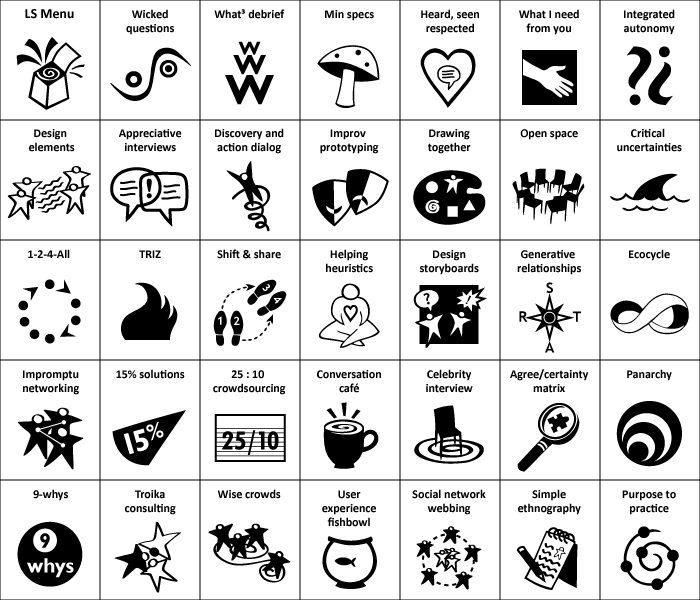
What makes Liberating Structures so effective (and fun) is that they break the mold of boring meetings. Think about the typical brainstorming meeting: either it’s a free-for-all where only the loudest voices get heard, or it’s a stiff round-robin that puts everyone to sleep. LS throws that out. For example, the popular “1-2-4-All” method starts with silent individual brainstorming (1), then pairs discuss their ideas (2), then pairs join another pair to share and build (4), and finally the whole group debriefs (All). During the solo and small-group phases, no one is allowed to dominate or critique – people jot their ideas on sticky notes quietly, then each person shares one-by-one in their duo or quartet. By the time you reconvene as a full team, every single person has contributed ideas, and many thoughts have cross-pollinated. The result is a wall plastered with contributions from introverts and extroverts alike. Only after generating a ton of ideas do you move into grouping themes, discussing, and prioritizing. The “no talking during the 1” rule and the step-by-step format may feel rigid at first, but paradoxically it leads to more freedom for shy participants and more variety of ideas. It’s structured brainstorming that still feels organic and lively.
Another Liberating Structure, “25/10 Crowdsourcing,” turns idea ranking into a fast-paced game: participants write ideas on index cards, randomly exchange cards 5 times, scoring them each time, until the highest-scoring ideas emerge on top. It’s basically speed dating for ideas. People are usually laughing by the third swap, and the best ideas bubble up without lengthy debate. Techniques like these keep things moving and prevent the usual meeting pitfalls (grandstanding, going in circles, awkward silence). Importantly, they make brainstorming feel like a collaborative game, not a chore.
Liberating Structures are easy to use and adaptable – you don’t need special training or fancy materials. Many church groups have found them useful for committee work, retreats, and visioning exercises because they fit any context and scale. For instance, a church council could use 1-2-4-All to generate mission project ideas, or a seminary class could use a structure called “Conversation Café” to brainstorm how to apply theology in real life. LS methods also pair well with Design Thinking; you might use LS activities during the ideation stage of a design thinking workshop to make sure you’re hearing from everyone.
The best part? They’re fun! When you try these unconventional formats, you’ll often hear people say, “Wow, that was actually enjoyable – and we got so much done!” In fact, one facilitator noted that every time she runs a 1-2-4-All brainstorming session, participants tell her “that was so fun!”. (How often do people say that about a planning meeting?) The combination of inventiveness, inclusiveness, and a clear outcome makes it feel satisfying. As LS co-founder Keith McCandless joked, this kind of “decide together what’s important, use all your creativity, and have fun doing it” approach is the best form of bossiness – a facilitator gently guiding the group to greatness. So if your goal is to lead a brainstorming session where every voice is heard and people leave energized, consider throwing a little Liberating Structures magic into the mix.
Tools of the Trade: From Sticky Notes to Miro Boards
Great ideas can be captured on anything from a napkin to a digital canvas. The tools you use for brainstorming should fit your team’s needs and add a bit of spark to the process. Here are some classic and modern tools (and how to use them) that can boost creativity:
-
Whiteboards & Flipcharts: Sometimes, the simplest tools are the most effective. A big blank whiteboard or a sheet of flipchart paper invites people to get up and start sketching, diagramming, or scribbling ideas. There’s something satisfying about uncapping a marker and visualizing ideas in real time. It also makes the session interactive – team members can physically move around, point to clusters of ideas, draw connections between concepts, and so on. Writing on a shared board encourages a “yes, and…” dynamic: one person draws a concept, another adds a sticky note next to it, someone else arrows two ideas together. This visual collaboration helps the group literally see what they’re thinking. It’s no wonder one facilitation guide insists “be visual” and “stick your ideas on the wall” as key brainstorming rules – it gets ideas out of heads and into a form the whole team can build on. Plus, a wall full of colorful scribbles and sticky notes is a tangible reminder of your collective creative power (and it makes you look very productive to any passerby!).
-
Sticky Notes (Post-its): Ah, the venerable Post-it note – hero of so many brainstorming sessions. Those little neon squares are more than office supplies; they are creativity catalysts. The idea is simple: team members write one idea per sticky note (to keep thoughts clear and movable), then stick them up on a wall or board. This method instantly turns a barrage of thoughts into a flexible collage you can rearrange and cluster. Sticky notes make brainstorming tactile and dynamic. You can have people silently brainstorm by writing notes for a few minutes (great for including quieter folks), then take turns posting and explaining their notes. Once all are up, the group can physically group similar ideas together into themes – often a silent activity where everyone comes up and moves notes around, which is surprisingly engaging. Every idea gets a moment in the spotlight. This process “makes it easy to map out ideas and organize thoughts in a flexible, dynamic way,” allowing the team to spot connections and gaps at a glance. It’s also very democratic: everyone’s handwriting on the wall together. Unlike an oral brainstorm where ideas vanish if not noted, the sticky notes ensure each contribution is seen and can be revisited. And if an idea doesn’t fit, you don’t crumple it up – just move it to an “out of scope” parking lot. The visual nature of this technique helps groups see the forest and the trees in their idea landscape. As a bonus, using sticky notes tends to equalize participation: even those hesitant to speak can contribute a note, and nobody gets interrupted. It’s a classic for a reason.
-
Miro (Online Whiteboard): In today’s hybrid and remote work world, digital collaboration tools are lifesavers for brainstorming. Miro is one of the most popular online whiteboard platforms out there – think of it as a giant, infinite canvas in cyberspace. Miro lets teams simultaneously add digital sticky notes, text boxes, drawings, images, even vote on ideas, all in real-time on a shared board. It’s “a versatile online whiteboard tool facilitating real-time collaboration, brainstorming, and visual project management for remote teams.” The canvas is zoomable and virtually endless, so you’ll never run out of space for ideas (no more squishing notes into the corner!). With templates for mind maps, empathy maps, and more, Miro can also guide your brainstorming with pre-made frameworks. The best part is how interactive it feels – you can see your colleague’s cursor swooping around, watch sticky notes pop up as they type, and even leave comments or reactions. It’s the digital equivalent of everyone crowding around the whiteboard, minus the physical crowding. Teams have used Miro for everything from sprint planning to church vision boards. For example, if your youth group leadership is scattered across different cities, you can hold a virtual brainstorm on Miro and still get that “all in one room” vibe. Another advantage: Miro captures all the ideas neatly, so you don’t have to transcribe illegible whiteboard scribbles later. And yes, it’s pretty fun to use – there are even silly features like emoji reactions and celebratory confetti to keep energy high. With tools like this, distance is no barrier to collective creativity.
-
Google Jamboard: If you’re in the Google Workspace ecosystem (or just want a simple, free solution), Jamboard is Google’s take on the digital whiteboard. Jamboard is a free digital whiteboard app that’s easy to jump into and integrates smoothly with Google Drive. Its feature set is simpler than Miro’s – think digital sticky notes, drawing tools, basic shapes, and text – which can actually be a plus if you want to keep things straightforward for a less tech-savvy group. Teams can edit the board together in real time, whether on laptops or tablets, and all the content saves in the cloud automatically. One facilitator described Jamboard nicely: it provides “an interactive canvas for remote and in-person teams to share and brainstorm ideas,” giving you “all the fun of an in-person brainstorm session, with none of the cleanup.” In other words, virtual sticky notes without sticky fingers! If your church committee has folks logging in from home, Jamboard can serve as the common space where everyone sticks their ideas (the same way they would on a physical wall). It’s also great for education settings – professors and students can brainstorm together during a Zoom class on a Jamboard. While it may not have as many bells and whistles as some paid tools, Jamboard’s simplicity and accessibility (anyone with a Google account can use it) make it a solid choice for collaborative ideation. And let’s be honest, the novelty of a digital whiteboard where you can draw a kooky doodle or slap a neon-green sticky note is often enough to get even the skeptics to participate.
-
Other Tools: There are plenty of other aids you can incorporate. Mind-mapping software (like XMind or MindMeister) is handy if you want to explode one idea into many sub-ideas in a visual tree. Trello or Kanban boards can be used for brainstorming in a more list-based way (imagine each card is an idea, and lists represent categories or stages). Polling apps or simple dot stickers are great for voting on ideas after generating them. Even something old-school like a stack of index cards can work (write one idea per card, then shuffle and sort). The key is to choose tools that your team is comfortable with and that match the energy of your session. For instance, if you’re doing a highly interactive in-person workshop, physical props like colored index cards, markers, or even Lego blocks for prototyping might be perfect. If you’re running a quick brainstorm in a Zoom meeting, a shared Google Doc where everyone types ideas simultaneously might do the trick in a pinch. Don’t be afraid to mix tools either: you could start with individual brainstorming on paper, then collect those into a Miro board, then vote with an online poll. The tools are there to serve your creativity, not the other way around. And sometimes a change of medium (say, moving from talking to writing, or from writing to sketching) will jolt loose a new angle on the problem. So keep an arsenal of options and deploy whatever keeps the ideas flowing!
Now that we’ve covered frameworks and tools, let’s see how all this comes together in real scenarios – one in a church setting and one in a seminary context.
Example 1: Launching a New Ministry
Imagine Springfield United Church, a mid-sized congregation in the United Church of Canada, ready to launch a new ministry. Let’s say it’s an initiative to reach young adults in the community – a demographic the church has struggled to engage. Rather than the staff dreaming up a plan in isolation, they decide to hold a creative brainstorming workshop with a broad range of people. The minister invites youth group members, college students, young professionals from the congregation, as well as some older members and board folks (to get cross-generational ideas and buy-in). On a Saturday afternoon, about 25 people gather in the fellowship hall, lured by the promise of pizza and the chance to shape this new ministry.
Setting the stage: The facilitator – a volunteer who’s handy with group processes – uses a mix of Design Thinking and Liberating Structures to guide the session. First, they do a quick “empathy” exercise: in pairs, participants interview each other on experiences they wish the church provided for young adults, or challenges that age group faces in connecting with church. This warms people up and grounds the brainstorm in real needs. A few insightful themes emerge (e.g. young adults crave authentic community, flexible scheduling, social justice engagement, etc.), which the facilitator jots on a flipchart.
Divergent ideation: Now the fun begins – it’s pure brainstorming time on the question, “What new ministry or program could we create that would connect with young adults seeking community and purpose?” To keep it engaging, the facilitator introduces 1-2-4-All, the Liberating Structure we discussed. For one minute, everyone silently writes down as many ideas as they can on sticky notes (one idea per note). Then they pair up (2) to compare notes and add new ideas sparked by discussion. The room buzzes with chatter as ideas start ping-ponging: “What if we had a monthly craft beer & theology night at the local pub?”… “Maybe a mentoring program pairing young adults with older mentors in their field?”… “How about a volunteer/service day that ends with a communal meal?”… No idea is dismissed – it’s a playful, imaginative free-for-all in pairs. Next, pairs join into groups of four (4), merging and building on their lists. You can see people getting excited as the concepts grow bolder: “Let’s do a podcast where young adults interview church elders about life lessons – intergenerational learning!” – “We could start a Sunday evening ‘café church’ with live music that young people would actually invite friends to.” By the time the whole group comes together (All), a wall is plastered with colorful sticky notes from the 1-2-4 rounds. Each group shares a few favorites, ensuring every voice is heard through their ideas on the wall, even if not everyone speaks to the full crowd.
At this point, everyone steps back and gazes at the mosaic of ideas. There are easily 40+ distinct suggestions. The facilitator then guides a silent clustering: she invites people to come up and move notes around, grouping similar ones into themes. A pattern emerges: a cluster of ideas around “alternative worship gatherings,” another around “mentoring/teaching,” one around “service projects,” and a smaller one around “online/digital outreach.” They label the clusters with quick titles. A few outlier sticky notes that don’t fit any theme are designated to an “Idea Parking Lot” for later (no idea gets thrown out entirely).
Narrowing and deciding: Now, the group needs to pick a direction to actually implement (they can’t do all 40 ideas). To get consensus, they use a multi-voting technique. Everyone gets five dot stickers to vote on the ideas or themes they find most exciting and feasible. People eagerly swarm the wall, dotting their favorites. It’s like giving candy to kids – some stack all their dots on one idea they really love, others spread them out. After voting, the top two concepts stand out clearly: a monthly casual “Faith & Fellowship” night (basically a café-style gathering with discussion and music), and a “Mentorship Mixer” program connecting young adults with experienced members for fellowship and skill-sharing. The facilitator asks, “Looking at these results, does this seem like the direction we want to go?” Heads nod around the room – because they collectively chose it. There’s natural buy-in.
Finally, the group has an open discussion on how to make the winning idea a reality. People who voted for it chime in with suggestions: “Our church coffeehouse space would be perfect for this if we spruce it up,” “I know a local band that might play for free,” “We should do a trial run next month.” There’s palpable excitement because everyone sees their fingerprints on the idea. The few who were more keen on other concepts still feel heard and often get on board, saying “Maybe we can incorporate a service project element into it later,” etc. By the end, a volunteer team has formed to take the idea forward, and a date is set for the first event.
Results: This whole process might sound idealistic, but it’s quite practical. The church ends up with a concrete plan that emerged from the community itself. Participants leave saying things like, “That was one of the most energizing church meetings I’ve ever been in!” Several folks mention how inventive and inclusive the process felt – even people who usually stay quiet had fun contributing. And importantly, when “Faith & Fellowship Night” launches, there’s already a core of champions who feel ownership of it. The buy-in is baked in because they helped create it. Contrast that with a scenario where the minister unilaterally decided on a program – the difference in enthusiasm and longevity is huge. By using creative brainstorming techniques, this UCC congregation not only generated more innovative ideas than one person could alone, but also built a coalition of support. The new ministry kicks off with strong attendance and energy, and when hiccups happen, the team iterates (design-thinking style) with feedback from participants. In essence, the brainstorming session didn’t just produce an idea – it launched a movement within the church. And yes, they did have a lot of fun in the process (there was laughter about some wild ideas that didn’t make the cut – R.I.P. “hot air balloon church” ). This example shows how creativity and playfulness, guided by a good framework, can breathe life into church innovation.
Example 2: Seminary Brainstorming a Lilly Grant Initiative
Now let’s turn to a mainline seminary – St. Bosco Theological Seminary – which has just received a generous grant from the Lilly Endowment. (Lilly Endowment grants are well-known in theological education for funding innovative projects, often encouraging collaboration and new forms of training church leaders.) St. Bosco Seminary’s grant is to support “innovation in pastoral formation for the 21st century.” This is a big, broad goal, and the seminary leadership wisely realizes they’ll need a lot of collective wisdom to decide how to spend this grant effectively. Rather than the dean and a couple of professors deciding behind closed doors, they opt for a collaborative ideation process involving faculty, staff, students, and even some external partners. The objective: generate and develop ideas for programs or approaches that could transform their pastoral training, using the grant resources. Essentially, the seminary needs to answer, “What bold initiatives could we undertake to better prepare future ministers?” – and they want everyone’s input.
The setup: Over a two-day planning retreat, about 30 stakeholders gather – including professors from different disciplines (Bible, theology, preaching, counseling), administrators, current seminarians, recent alumni, and representatives from local churches that hire the seminary’s grads. This diverse mix ensures a 360-degree perspective. To guide the process, the seminary brings in a facilitator familiar with Design Thinking in education. They also use hybrid tools: one big conference room wall is turned into an idea gallery with flipchart sheets and sticky notes, and a set of laptops and a projector are set up with a live Miro board for those joining remotely (a couple of church partners and one professor on sabbatical abroad dial in).
Empathize/Define phase: First, they spend some time defining the challenge and gathering insights. Small groups do a quick SWOT analysis of the seminary’s current program and interview a few “end users” – in this case, a panel of recent graduates and the churches that received them. These conversations surface some needs and gaps (for example: new pastors feel unprepared in entrepreneurial leadership; congregations wish ministers had more training in community engagement; students desire more hands-on experience, etc.). The facilitator frames a concise problem statement based on this: “How might we reimagine pastoral training at St. Bosco so that graduates are more equipped for the rapidly changing landscape of ministry?” With everyone clear on the mission, they move into brainstorming mode.
Idea generation: To kick off ideation, the facilitator uses a mash-up of Liberating Structures techniques to keep things lively. They start with an Impromptu Networking activity: participants pair up with someone they don’t know well for a rapid-fire exchange – each pair has 3 minutes to brainstorm out loud as many wild ideas as possible for the question before switching to new partners. It’s like a creative speed-date and the room gets loud with laughter and “a-ha!” moments. People jot down any promising ideas on index cards. Next, they try a structured brainstorm using brainwriting: at tables of 5, each person writes one idea on a piece of paper, then passes it to the next person, who builds on it or writes a new idea, and so on. After a few rounds, the papers on each table are filled with concepts ranging from incremental tweaks to pie-in-the-sky innovations.
To stir the pot further, the facilitator suggests a fun challenge borrowed from design thinking: the “Worst Idea” exercise. Everyone is asked to come up with the most absurd, terrible idea for pastoral training they can imagine – the goal is to remove inhibitions by going to opposite extremes. Gales of laughter ensue as people share intentionally bad ideas (“Let’s replace all classes with 24/7 prayer; no academic work at all!” or “Have AI robots write all our sermons – professors can retire!”). Once the giggles subside, they examine these worst ideas to see if any hidden good ideas are lurking within or if they reveal something important (e.g., the “no academic work” joke highlights a desire for more practical learning; the AI joke sparks an idea about teaching with new tech). This reversal technique loosens everyone up and sometimes flips absurdity into insight.
Collecting and refining: By the end of these activities, the seminary team has an abundance of ideas: everything from creating a network of regional training hubs, to integrating internships in every semester, to launching an online platform for continuing education, to partnering with community organizations for practicum experiences, to developing an improv theatre course to teach preaching (that one came from the “worst idea” game and actually has merit!). All these ideas are captured either on sticky notes, index cards, or directly on the Miro board by remote participants. They then organize them into categories on a big affinity map – similar to the church example, clustering related ideas together. They identify a few big themes like “Curriculum Innovations,” “Experiential Learning,” “Technology & Ministry,” and “Partnerships/Networks.” Sub-ideas fall under these.
Now comes choosing what to actually pursue. Given the grant could potentially fund multiple projects, they don’t have to pick just one idea, but they do need to prioritize. The facilitator uses a “Dotmocracy” vote combined with discussion. Everyone gets to vote on their top 5 ideas (considering both impact and feasibility). The results show clear enthusiasm for a few concepts: (1) a Ministry Incubator Lab – a program where students design and run experimental ministry projects with grant funding (combining entrepreneurship with practical ministry); (2) a Hybrid Internship Model – partnering with a network of churches to place students in part-time roles throughout their study, not just a final-year internship; and (3) a Digital Learning Platform – creating resources and courses for alumni and lay leaders, extending the seminary’s reach. Other ideas are noted as good but secondary.
They break into three groups, each to flesh out one of the top ideas. Here’s where a bit of prototyping comes in: one group storyboards how the Ministry Incubator Lab might work – they outline an example journey of a student going from idea to pilot project to evaluation. Another group sketches a new weekly schedule that integrates the hybrid internships. The third group drafts a mock-up homepage for the digital platform. These rough prototypes are then shared in a gallery walk. The whole room gives feedback via sticky notes (“Love this – consider adding a mentorship component”; “What about rural contexts? How to include them?” etc.). The groups refine their concepts based on this input.
Outcome: By the end of the retreat, St. Bosco Seminary has a co-created plan for its Lilly Grant. They will allocate funds to establish the Ministry Incubator Lab and the expanded internship program, and a smaller portion to start developing the digital platform. Crucially, this plan has emerged from a collaborative process: faculty from various departments are on board because they had a voice in shaping it, students are excited because they see their needs addressed, and external partners are invested because they were part of the conversation (one church leader said, “This is the first time we’ve been asked what we need from new pastors – thank you!”). The seminary leadership notes that this approach fulfills exactly what Lilly Endowment envisioned with these grants – “innovative and collaborative approaches to theological education” rather than business-as-usual.
When they report back to Lilly Endowment, they can cite not just a list of planned activities, but also the broad engagement behind them. This likely strengthens their case for success, since research shows people support what they help create. Indeed, when implementing the grant initiatives, the seminary continues using brainstorming and feedback loops (true to design thinking form) – for instance, in designing the Ministry Incubator Lab’s application process, they convene a student focus group to brainstorm criteria. The collaborative spirit snowballs.
For the participants, this process was both productive and motivating. A senior professor who was initially skeptical of “workshop gimmicks” admitted that using methods like brainwriting and the “worst idea” game actually drew out ideas he’d never considered, and he enjoyed the fresh interaction with colleagues and students. One of the students said she felt heard and was thrilled that an idea she voiced in a pair exercise (about continuous internships) ended up in the final plan. By mixing serious purpose with playful elements, the seminary not only hatched innovative strategies for its future, but also nurtured a culture of creativity and trust. It’s a reminder that even in institutions known for careful scholarship, a bit of sticky-note-fueled spontaneity can lead to holy inspiration!
Conclusion: Brainstorming the Future – Together
At CHURCHx, we practice what we preach about creative brainstorming. Our team regularly huddles (often with whiteboard markers in one hand and coffee in the other) to dream up new ideas for educational programming and faith-based learning experiences. We’ve made brainstorming an integral part of our planning and design methodology – whether we’re developing a new online course or mapping out a community workshop, we gather a diverse group of minds, use the frameworks and tools described above, and let the ideas fly. We might start by empathizing with learner needs, then use a Liberating Structure like 1-2-4-All to generate content ideas, sketch prototypes of the learning platform, and so on. These sessions are lively, inclusive, and yes, even fun (our whiteboard doodle game is strong). The result is that our programs bear the fingerprints of many contributors and are so much better for it. We’ve found that this collaborative approach not only yields innovative solutions but also builds a team culture of trust and creativity – everyone on the CHURCHx team knows their voice can shape our direction.
We believe that the same spirit of imaginative, participatory ideation can transform how churches and ministries approach their challenges. You’ve seen how involving many people in a structured, yet playful, brainstorming process can generate exciting new ministries and energize institutions for the future. Now, we invite you to join in this creative approach. Is your church looking to design a fresh ministry program? Is your organization planning an educational initiative and seeking inspiration? The CHURCHx team is here to help bring these brainstorming techniques to your context. Let’s co-create the future of faith education together.
Ready to spark some holy imagination? Contact CHURCHx for a consultation to design engaging, innovative educational programming for your community.
Where to Learn More:
-
Simoneaux, S. & Stroud, C. Brainstorming: The Importance of "Right". ASPPA Net. – Brainstorming establishes common ground and buy-in; Brainstorming rules encourage creativity and fun.
-
Voltage Control. Brainstorming in Design Thinking: Best Practices. – Diverse teams solve problems faster, leading to more innovative ideas; Psychological safety is crucial for creativity; Design-led companies outperform others by 219%.
-
Panzer, R. Design Thinking and Church Community: Step Three – Ideate! – Ideation phase means tossing out constraints to spark creativity; Churches should suspend “we can’t” thinking during brainstorming.
-
Liberating Structures (McCandless & Lipmanowicz). – Liberating Structures include and engage every voice; 33 methods anyone can use; 1-2-4-All example: no talking at first, no critiquing ideas, everyone participates, and it’s fun.
-
Viking Blog. Post-it Note Brainstorming Method. – Sticky notes help map out ideas flexibly and visually; Using notes ensures everyone’s ideas are heard and can be rearranged to spot patterns.
-
ClickUp Blog. Miro vs. Jamboard. – Miro is an online whiteboard enabling real-time collaborative brainstorming for distributed teams; Jamboard is a free Google whiteboard, simple and great for remote idea-sharing (all the fun, none of the cleanup!).
-
IDEO U. 7 Rules of Brainstorming. – Defer judgment and encourage wild ideas to let creativity soar; Be visual and go for quantity – aim for 100 ideas in 60 minutes!.