
Effie MacMurchy
The Creative Crossroads of Theology and Technology - A Conversation with Tay Moss
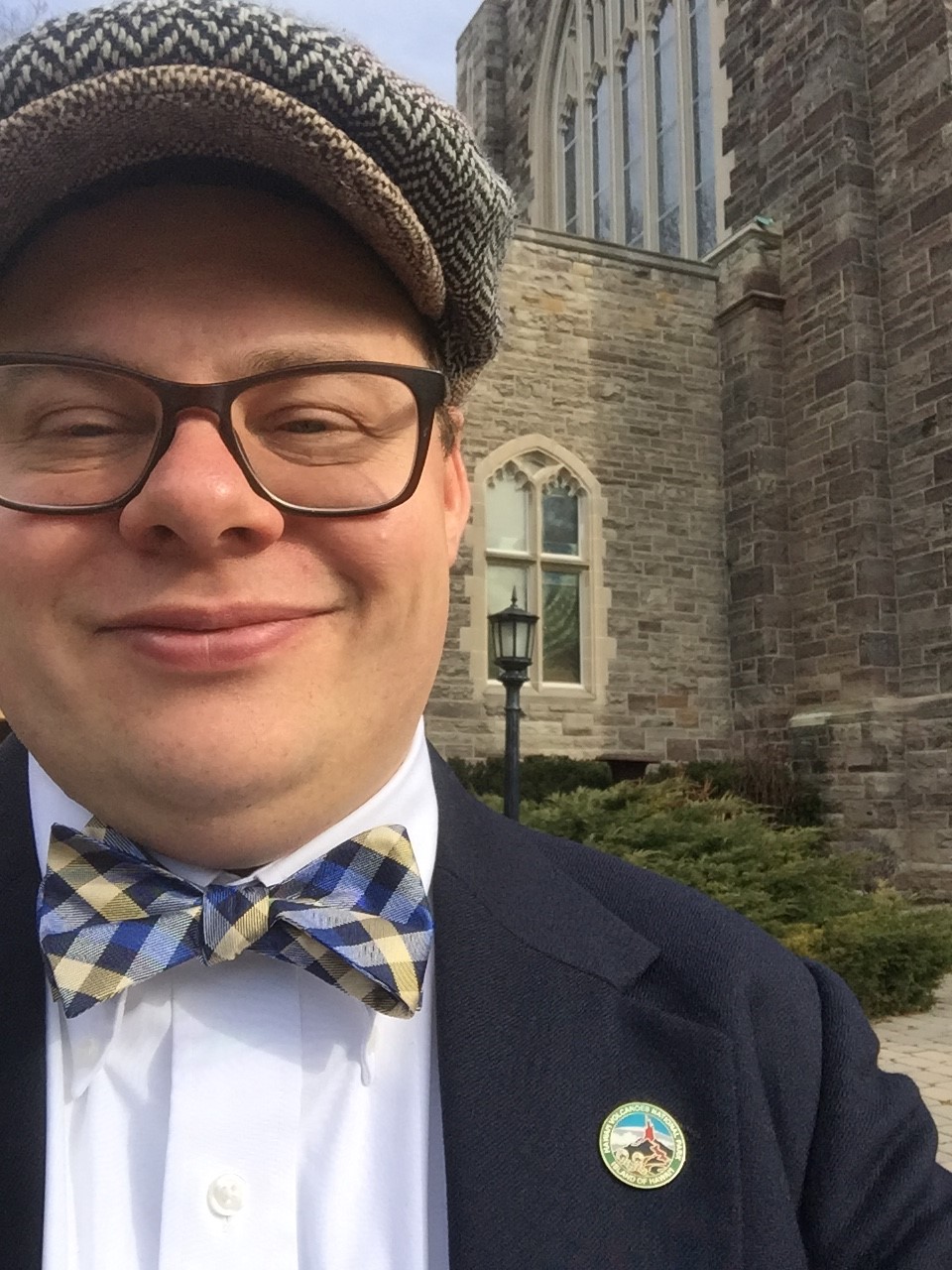 Readers of this blog may already be familiar with the subject of this interview, but in today's post, we wanted to take a closer look at and learn more about the creative voice behind CHURCHx; Tay Moss.
When Tay and I first discussed the idea of putting together a 20-questions style interview, one of the touchstones brought up was Inside the Actors Studio. James Lipton, at the end of each interview, would ask his guest 10 questions, which were originally asked by host Bernard Pivot on the French series “Bouillon de Culture”. Those familiar with Inside the Actors Studio might have an inkling as to what the final question of this interview may be, but I’ve chosen not only to end on one of Pivot’s questions but also open with one.
EM: You’re a minister, an education professional, a talented speaker and involved in so many different areas; I would imagine words are extremely important to you. Tay, what’s your favourite word?
TM: Lush.
EM: Oh, very good one!
TM: It’s a texture, it’s that feeling of those really, really soft blankets that are really fuzzy, and you don’t want to put them through the wash because you don’t want them to lose that fuzzy, soft quality. They’re just like one giant static electric charge, you know? And they’re especially good when they’re put on very soft couches and you just kind of sink into them and you can’t get out easily because you’re sunk into it and can’t get any leverage to escape, like a ball pit.
EM: Conversely, what is your least favourite word?
TM: No. (laughter) No, I really try to make it a personal discipline to say Yes as much as I possibly can to everything that life has to offer. And I think leading a life that is affirmative of everything as much as possible is a really good philosophy to live by because it means you don’t miss out on opportunities. And I know people who have turned down opportunities for what I thought were poor reasons, you know, because of insecurities and stuff. And it’s like, oh, don’t say no to that, it’s perfect!
 EM: Speaking of words, what was the last book you read?
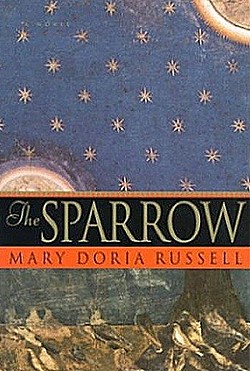
TM: The Sparrow. I forget the name of the author[1], but it’s a science fiction book about Jesuits in space. Basically, the story is that scientists discover signals from an alien planet, and the Jesuit order is sponsoring these scientists so they kind of have a leg up on everybody. And while the rest of the world is trying to figure out what to do with so much disagreement among the world’s nations, the Jesuits, because they have the resources and other tools, are able to put together a private space mission. Basically, they send linguists and anthropologists and other scientists all the way to this other planet to study the culture. It’s a story about human encounters with otherness; it’s a story about language; it’s a story about culture, and about the failure of our imagination to conceptualise the world as it is. Or people as they are. It’s a failure of imagination, somehow, that keeps us from being able to embrace what IS in a rich and full way.
 EM: Now I need to add that to my reading list! As what
sounds like quite a perspective-changing piece of media in its own right, is
there another book or film that changed your perspective in some way?
EM: Now I need to add that to my reading list! As what
sounds like quite a perspective-changing piece of media in its own right, is
there another book or film that changed your perspective in some way?
TM: There have been so many. I love movies, but I’ll pick one, which is The Big Sleep, which is a classic noir movie starring Humphrey Bogart and Lauren Bacall. And it’s a very sophisticated movie with a plot that goes right along and expects you to keep up with the facts. It’s a detective story, so there’s that element of whodunnit, but one of the things I really admired is the portrait of the detective, Phillip Marlowe. He’s incredibly intelligent and is also trying to navigate complex moral situations where it’s not clear whose interests should be prioritised. And the other thing about it I really admire was it was a window into adult conversation, adult society. I saw it in college, so not that young, but there’s a kind of specialness to the quality of the whole word that movie evokes. It helped me to shift my thinking about storytelling and how storytelling should work, and how knowledge works.
EM: You obviously have a love for storytelling and media, and you’re someone who picks up quite a lot very quickly. If you could instantly master any hobby, skill, language, what would it be?
TM: I’d like to learn how to play a musical instrument at a high level. And I wouldn’t even care which one. I think piano would be amazing; I think violin, I could do duets with my wife and kids; guitar would be fun at parties, you know? I’d like to learn an instrument.
EM: What’s a skill you wish you had learned earlier in life?
TM: How to negotiate for what I want in complex situations. I’ve gotten much better at that as I’ve gotten older. I think earlier in life, I kind of took what I could get, and maybe as we go along in life, we learn skills to negotiate needs.
EM: From the past into the present; what are learning about yourself lately?
TM: That I need to get better at creating and maintaining my own boundaries about what I will commit to do. (laughter)
EM: Tricky, tricky with that aversion to saying No!
TM: Exactly, how do you balance that? But I’m doing way too much simultaneously and it’s a period of my life where the work is personally very satisfying and a period of astounding productivity, I’m making stuff left and right and doing so much that’s so very rewarding, but on the other hand, it’s not sustainable at this pace. So, I’m really hoping that once this research project is done this summer, I can really kind of back off on some of the stuff that I’ve been working so hard on.
EM: There are certainly quite a number of hats you wear! But what profession other than your own would you like to attempt?
TM: I would love to be a professional mariner. Being a Navy captain would be quite interesting. But that’s actually quite a short part of the career, to have that opportunity, whereas if you’re the captain of a private sailing vessel, like a large yacht or something like that, you can have a very long trajectory of a career where you’re in charge of just, big boats. Maybe a container ship? But if I was the captain of a private yacht, that would be fun because you’d be travelling all over these exotic locations, the Caribbean and the Mediterranean. And I would want it to be a ship that belongs to an owner that has some adventure to them, you know? So, we would go to the Arctic, the Antarctic, we wouldn’t just stick to the Caribbean and the equator, you know.
EM: You said that this is a very productive and professionally fulfilling time for you. What’s one thing in particular that you think CHURCHx does exceptionally well?
TM: The versatility of the platform is unmatched. It’s very hard to think of what I can’t do with it. It’s a very, very powerful tool, which is part of the challenge, because it’s the tyranny of the blank page. You know, when you give people a blank page and say, draw whatever you want, it’s very hard for them to even start. So, what I’ve realised is I have to create more templates and more helps to even get people started in these conversations, in these journeys of creating things. But yes, I think that’s something that CHURCHx does extremely well.
EM: And what’s one goal you’d love to see CHURCHx achieve this year?
TM: I want to create an interface for smartphones into CHURCHx that is easy to use. It may not have a lot of the features that CHURCHx normally supports but could create an answer to the problems of people not having computers, not knowing how to use these things, etc., that would be so easy that anybody could do it. It would be a very simple tabular interface with easy access to everything you need, and that’s becoming increasingly plausible because AI makes it much easier to sort and classify information. I’ve also been experimenting with the ability to create a phone interface into CHURCHx itself, so that someone could call and put in a code number to access a course, and then with just audio cues back and forth, access the content of that course through the phone. For example, it would say, “the first activity is to read this story. Would you like me to read it to you?”
EM: I imagine that would also serve towards accessibility as well.
TM: That’s one of the things I’m trying to solve is improving the accessibility. Right now the site is accessible by the conventional standards of web accessibility, but I want to go beyond conventional standards into an extraordinarily well accessible site.
EM: What does success mean to you?
TM: Success means that I will have altered the conversations of which I am a part, that the culture of these institutions I’m involved in will actually be noticeably different because of the interventions that my team and I made in that space. So, I actually want to change how theological education is done in North America, you know? And that sounds ridiculous, but it is within reach, I don’t think it’s that far off. I think if I can develop a couple more key strategic pieces and have them fall into place, I think that impact could happen. Even with the AI stuff, for example, it could be that I create some kind of killer AI teaching app that is the thing that everybody wants to use to teach theology, you know? Or it could be the accessibility thing I was just talking about, but that’s the thing, people are just like, “Oh my God, this makes it so easy for us to deliver our content to our people!” I don’t know, but that would be success to me.
EM: What’s the best, most meaningful compliment you’ve ever received?
TM: My father once said to me, we were sailing together or something, but I did something, I don’t remember what, but he said, “yet another thing that you’re better at than I am”.
EM: That’s an extremely impactful thing to hear from a parent!
TM: And at that point, I didn’t believe that there was anything I did better than him, you know? But he was acknowledging that I somehow, in his perception, surpassed him, which I hadn’t really thought about.
EM: Thinking about family, if you could create a new holiday, what would you celebrate?
TM: Maybe Hammock Day. Where everyone has to just go camp out in a hammock for a day.
EM: What is something you’re deeply grateful for?
TM: I am deeply grateful to live in a time where so much is changing so rapidly, and in ways that require adaptive and imaginative leadership. Because I feel like that just goes right into some of the gifts that I have, and so I feel like I’m very well suited to this age, bouncing around between all these things. An example is Vibe Coding! This idea that you can build a computer program where we’re using AI has just unlocked so much for me, because now all my software fantasies can become reality without having to pay much, just my time really, to create computer programs that fulfill these fantasies. It's extraordinary that we live in that time.
EM: Before diving into all this tech, what initially called you to ministry?
TM: I felt like I was called to be on the edge of the community, and to occupy the thin places between this world and the next, to kind of be in that liminal edge, and to look into the mystery and then to turn around and look back toward the people and try to proclaim or describe what I see. And that’s harder than it sounds, to maintain that position! It’s lonelier than it sounds, but you get to see both sides of things at the same time, and it feels like that with something like CHURCHx as well, where I see both the perspective of the users and I see the perspective of the institutions that are trying to serve those users, and I see it from the perspective of the technology and what the technology’s trying to do. So, I see all these perspectives at once, and it gives me a very privileged advantage and viewpoint. And from that place, I try to kind of solve it for all people, you know? Try to work with each of these constituencies’ perspectives together to try to create a new thing.
EM: And tying that into the amount of tech work you do within that world, what are the challenges of digital ministry and digital theological education?
TM: I think the biggest challenge is not really unique to technology per se, but it’s the fact that the pace of social and cultural change is so fast, that a lot of the old adaptations to what was there have fallen apart, and the church has not yet built ways to adapt faster to deal with this rate of change. That’s the biggest challenge, and the tech adaptation just comes along with that. Unless the church is forced to adopt it like they did during COVID, it’s very difficult to get them to adopt technologies unless they absolutely have to.
EM: It’s very clear that there are many hats you wear and many projects you’re involved in, but either within your professional or your personal life, what is your favourite way to give back or serve your community?
TM: I give away a lot of tech help for free, that’s definitely something I do a lot of (laughter). I think one of the biggest ways that I give back is that I actually still do parish ministry. Once a month or so I preach and preside, and I don’t have to preach, I could say that my Monday to Friday job is a fulltime job – more than a fulltime job! – and it’s enough, but I still want to preach, and I feel like I’m a better preacher now that I’ve ever been. And I think part of that is because I’m not doing parish ministry, so I’ve got all kinds of pent up, you know, prophetic energy or whatever, and that’s where I can say, Ok, here we go. I’ve just been very pleased with my preaching, and I think it’s a really nice thing that I’m able to give to the community.
EM: And with all that you do and have done, what’s one thing that you’ve done that you’re proud of?
TM: I’ll pick one I haven’t talked about yet. How about the tree house that I built for my kids? I built a proper treehouse, and I built it to code, pretty much as you build a deck, so it’s got proper joists, it’s spaced properly and all that, and it’s a good six feet off the ground, with a 10x20 foot platform, so they can have their friends up there too.
EM: It’s clear that family and ministry mean a great deal to you. Who or what inspires you?
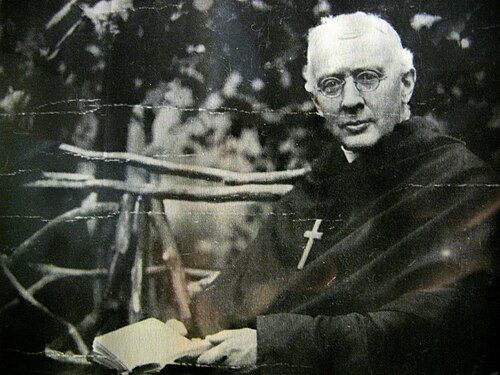 TM: Who comes to mind right now would be James Sargent
Huntington III, who was the founder of the Order of the Holy Cross, and he was
somebody who forsook opportunities to be successful by the world’s standards at
the time in order to follow the monastic call, which was incredibly unusual. He
was, socially, extremely progressive, really believed strongly in economic
reform to the taxation system in a way that would have totally undermined the
capital markets as we know them now. He was a very remarkable person, very
inspiring, and he has these intense eyes, when he looked at you he really
looked through you, you know, like he saw you in a deep way; he was charming
and intense and a good preacher and builder too, building an organisation from
nothing to an organisation that still exists today. And another sort of thing
that inspires me is Doctor Who. I mean, travelling around the universe and
through time, fixing different problems, using a combination of skills, one of
the most important ones being good humour.
TM: Who comes to mind right now would be James Sargent
Huntington III, who was the founder of the Order of the Holy Cross, and he was
somebody who forsook opportunities to be successful by the world’s standards at
the time in order to follow the monastic call, which was incredibly unusual. He
was, socially, extremely progressive, really believed strongly in economic
reform to the taxation system in a way that would have totally undermined the
capital markets as we know them now. He was a very remarkable person, very
inspiring, and he has these intense eyes, when he looked at you he really
looked through you, you know, like he saw you in a deep way; he was charming
and intense and a good preacher and builder too, building an organisation from
nothing to an organisation that still exists today. And another sort of thing
that inspires me is Doctor Who. I mean, travelling around the universe and
through time, fixing different problems, using a combination of skills, one of
the most important ones being good humour.
EM: Good humour, communication, and love.
TM: Exactly, exactly.
EM: I mentioned when we started that those familiar with Inside the Actors Studio might know what question would be wrapping up this interview, but Tay, in your view of Heaven or the afterlife, what would you like to hear God say when you arrive?
TM: Well done, good and faithful servant.